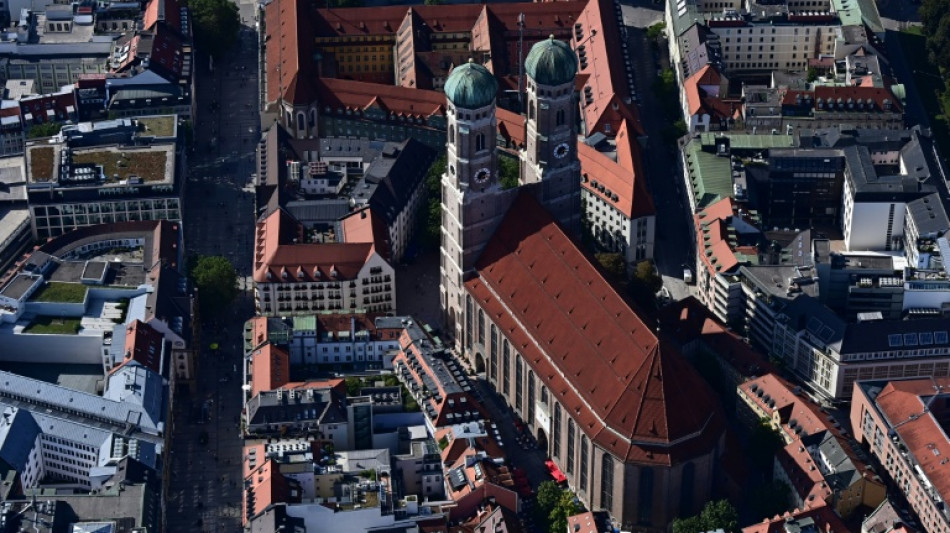
Germany identifies far-right suspect in deadly 1970 antisemitic attack / Photo: Tobias Schwarz - AFP/File

 London
 7 °C
7 °C
 Manchester
6 °C
Manchester
6 °C
 Glasgow
 13 °C
13 °C
 Dublin
 7 °C
7 °C
 Belfast
6 °C
Belfast
6 °C
 Washington
15 °C
Washington
15 °C
 Denver
18 °C
Denver
18 °C
 Atlanta
16 °C
Atlanta
16 °C
 Dallas
21 °C
Dallas
21 °C
 Houston Texas
26 °C
Houston Texas
26 °C
 New Orleans
 25 °C
25 °C
 El Paso
23 °C
El Paso
23 °C
 Phoenix
32 °C
Phoenix
32 °C
 Los Angeles
27 °C
San Diego
26 °C
San Francisco
16 °C
Chicago
17 °C
Minneapolis
14 °C
Seattle
13 °C
Portland
17 °C
Salt Lake City
20 °C
Las Vegas
29 °C
Miami
26 °C
Jacksonville
25 °C
San Antonio
22 °C
Bermuda
25 °C
Nassau
15 °C
Iqaluit
Los Angeles
27 °C
San Diego
26 °C
San Francisco
16 °C
Chicago
17 °C
Minneapolis
14 °C
Seattle
13 °C
Portland
17 °C
Salt Lake City
20 °C
Las Vegas
29 °C
Miami
26 °C
Jacksonville
25 °C
San Antonio
22 °C
Bermuda
25 °C
Nassau
15 °C
Iqaluit
 0 °C
Yellowknife
4 °C
Anchorage
6 °C
Fairbanks
1 °C
Barrow
-9 °C
Calgary
8 °C
Edmonton
16 °C
Winnipeg
7 °C
Goose Bay
14 °C
Halifax
12 °C
Boston
13 °C
Ottawa
12 °C
Toronto
14 °C
Detroit
15 °C
Cleveland
17 °C
New York
15 °C
Baltimore
14 °C
Philadelphia
14 °C
Nuuk (Godthåb)
3 °C
Hong Kong
29 °C
Singapore
32 °C
Melbourne
25 °C
Canberra
0 °C
Yellowknife
4 °C
Anchorage
6 °C
Fairbanks
1 °C
Barrow
-9 °C
Calgary
8 °C
Edmonton
16 °C
Winnipeg
7 °C
Goose Bay
14 °C
Halifax
12 °C
Boston
13 °C
Ottawa
12 °C
Toronto
14 °C
Detroit
15 °C
Cleveland
17 °C
New York
15 °C
Baltimore
14 °C
Philadelphia
14 °C
Nuuk (Godthåb)
3 °C
Hong Kong
29 °C
Singapore
32 °C
Melbourne
25 °C
Canberra
 19 °C
Adelaide
19 °C
Adelaide
 27 °C
Darwin
32 °C
Perth
19 °C
Fort Worth
21 °C
Honolulu
25 °C
Sydney
27 °C
Darwin
32 °C
Perth
19 °C
Fort Worth
21 °C
Honolulu
25 °C
Sydney
 20 °C
Johannesburg
15 °C
Dubai
35 °C
Mumbai
34 °C
Zürich
15 °C
Tokyo
20 °C
Johannesburg
15 °C
Dubai
35 °C
Mumbai
34 °C
Zürich
15 °C
Tokyo
 25 °C
Seoul
24 °C
Delhi
28 °C
Beijing
24 °C
Riyadh
30 °C
Prague
10 °C
Pennsylvania
12 °C
Valletta
24 °C
Manama
33 °C
Warsaw
12 °C
Stockholm
11 °C
25 °C
Seoul
24 °C
Delhi
28 °C
Beijing
24 °C
Riyadh
30 °C
Prague
10 °C
Pennsylvania
12 °C
Valletta
24 °C
Manama
33 °C
Warsaw
12 °C
Stockholm
11 °C
German investigators said Thursday they had identified a far-right suspect who allegedly carried out a notorious 1970 arson attack on a Jewish centre in Munich that killed seven Holocaust survivors.
The attack on the building, which served as a retirement home and guest house, stands as one of the worst crimes targeting the Jewish community in the history of post-war Germany.
Investigators struggled to crack the case for decades, with speculation that a Middle Eastern terrorist or far-left militant may have been behind it, and finally shelved their probe in 2017.
But last year the investigation was reopened after a tip-off, leading officials to identify a German man with a "Hitler fixation", who passed away in 2020, as likely responsible, police and prosecutors in Munich said.
"The new investigations conducted after the reopening of the case strongly indicate that the suspect was the perpetrator," they said in a joint statement.
But they added that a conclusive "legal clarification" was not possible as charges cannot be brought against a deceased person under German law.
Officials were also unable to work out whether he had worked as part of a group, although there were no solid indications that others were involved, they said.
The suspect, aged 25 at the time of the crime, belonged to the "right-wing milieu", and witnesses described him as an antisemite, police and prosecutors said.
While they did not name him, Der Spiegel magazine partially identified him as Bernd V.
Officials reopened their investigation in April last year after a female witness came forward, saying that the suspect had been in close contact with one of her relatives.
She chose to speak out shortly after the death of her relative, and passed on new information to authorities.
On February 13, 1970, the day of the attack, the suspect was allegedly in the immediate vicinity of the crime scene, according to police and prosecutors.
- Continuing far-right threat -
Looking at the Jewish community centre, he is said to have remarked that "the Jews had everything" and he wanted to "set them on fire", police and prosecutors said.
About 15 minutes later, the building was ablaze.
He is suspected of dousing the wooden staircase of the centre with petrol before starting the fire, which quickly engulfed the building. As well as the seven residents killed, 15 were injured, four of them seriously.
Suspicion that the 25-year-old was behind the crime intensified as investigators learnt more about his background.
He is said to have listened to Nazi dictator Adolf Hitler's speeches in his youth and was sentenced to juvenile detention in the 1960s after being found guilty of blowing up two telephone booths in Munich, according to officials.
A former classmate described him as showing "hostility" towards Jews while an ex-headmaster said he was cold and calculating, and recounted how he had used a dagger from a Nazi youth organisation during a fight.
Germany, which has spent decades trying to atone for its dark World War II past, still struggles with regular far-right and neo-Nazi attacks and plots.
Authorities consider far-right extremism the most serious security threat facing the country, and greater than that posed by Islamist groups.
In 2025 there were 58,700 individuals classified as right-wing extremist in Germany, a jump of 17 percent from the previous year, according to a report from Germany's domestic intelligence agency (BfV).
The number of right-wing extremists considered potentially violent meanwhile rose to 15,600, it said.
B.Lara--HdM