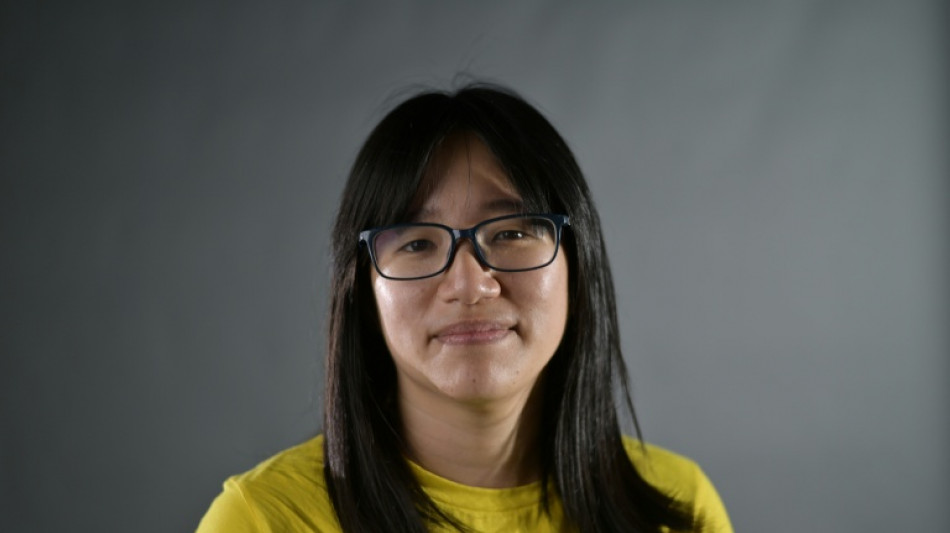
The Hong Kong Tiananmen vigil activists convicted in national security trial / Photo: Peter PARKS - AFP/File

 London
 7 °C
7 °C

 Manchester
6 °C
Manchester
6 °C
 Glasgow
 13 °C
13 °C
 Dublin
 7 °C
7 °C
 Belfast
6 °C
Belfast
6 °C
 Washington
15 °C
Washington
15 °C
 Denver
18 °C
Denver
18 °C
 Atlanta
16 °C
Atlanta
16 °C
 Dallas
21 °C
Dallas
21 °C
 Houston Texas
26 °C
Houston Texas
26 °C
 New Orleans
 25 °C
25 °C
 El Paso
23 °C
El Paso
23 °C
 Phoenix
32 °C
Phoenix
32 °C
 Los Angeles
27 °C
San Diego
26 °C
San Francisco
16 °C
Chicago
17 °C
Minneapolis
14 °C
Seattle
13 °C
Portland
17 °C
Salt Lake City
20 °C
Las Vegas
29 °C
Miami
26 °C
Jacksonville
25 °C
San Antonio
22 °C
Bermuda
25 °C
Nassau
15 °C
Iqaluit
Los Angeles
27 °C
San Diego
26 °C
San Francisco
16 °C
Chicago
17 °C
Minneapolis
14 °C
Seattle
13 °C
Portland
17 °C
Salt Lake City
20 °C
Las Vegas
29 °C
Miami
26 °C
Jacksonville
25 °C
San Antonio
22 °C
Bermuda
25 °C
Nassau
15 °C
Iqaluit
 0 °C
Yellowknife
4 °C
Anchorage
6 °C
Fairbanks
1 °C
Barrow
-9 °C
Calgary
8 °C
Edmonton
16 °C
Winnipeg
7 °C
Goose Bay
14 °C
Halifax
12 °C
Boston
13 °C
Ottawa
12 °C
Toronto
14 °C
Detroit
15 °C
Cleveland
17 °C
New York
15 °C
Baltimore
14 °C
Philadelphia
14 °C
Nuuk (Godthåb)
3 °C
Hong Kong
29 °C
Singapore
32 °C
Melbourne
25 °C
Canberra
0 °C
Yellowknife
4 °C
Anchorage
6 °C
Fairbanks
1 °C
Barrow
-9 °C
Calgary
8 °C
Edmonton
16 °C
Winnipeg
7 °C
Goose Bay
14 °C
Halifax
12 °C
Boston
13 °C
Ottawa
12 °C
Toronto
14 °C
Detroit
15 °C
Cleveland
17 °C
New York
15 °C
Baltimore
14 °C
Philadelphia
14 °C
Nuuk (Godthåb)
3 °C
Hong Kong
29 °C
Singapore
32 °C
Melbourne
25 °C
Canberra
 19 °C
Adelaide
19 °C
Adelaide
 27 °C
Darwin
32 °C
Perth
19 °C
Fort Worth
21 °C
Honolulu
25 °C
Sydney
27 °C
Darwin
32 °C
Perth
19 °C
Fort Worth
21 °C
Honolulu
25 °C
Sydney
 20 °C
Johannesburg
15 °C
Dubai
35 °C
Mumbai
34 °C
Zürich
15 °C
Tokyo
20 °C
Johannesburg
15 °C
Dubai
35 °C
Mumbai
34 °C
Zürich
15 °C
Tokyo
 25 °C
Seoul
24 °C
Delhi
28 °C
Beijing
24 °C
Riyadh
30 °C
Prague
10 °C
Pennsylvania
12 °C
Valletta
24 °C
Manama
33 °C
Warsaw
12 °C
Stockholm
11 °C
25 °C
Seoul
24 °C
Delhi
28 °C
Beijing
24 °C
Riyadh
30 °C
Prague
10 °C
Pennsylvania
12 °C
Valletta
24 °C
Manama
33 °C
Warsaw
12 °C
Stockholm
11 °C
A Hong Kong court found two pro-democracy activists who organised annual vigils to mark China's deadly Tiananmen crackdown guilty of "incitement to subversion" on Friday.
The closely watched national security case was seen as a bellwether for freedom of expression in the Chinese city.
Lee Cheuk-yan and Chow Hang-tung were leaders of the now-defunct Hong Kong Alliance, a group that organised annual candlelit vigils to commemorate the victims of Beijing's 1989 Tiananmen crackdown.
A third defendant, Albert Ho, pleaded guilty in January.
Here is what you need to know about the three activists:
- Chow Hang-tung -
Chow, 41, is a Cambridge-educated lawyer who represented herself at the trial, speaking at a brisk pace and responding to questions quickly.
Part of a generation that came of age after Hong Kong's 1997 return to Chinese rule, she attended the vigils from childhood and joined the Alliance in 2010 as a volunteer.
She worked for years in an advocacygroup focused on human rights in China.
She became a spokesperson for the Alliance after Beijing imposed a national security law on the city in 2020, following huge and sometimes violent protests the year before.
Jailed since 2021, Chow has undertaken a hunger strike every June to commemorate the 1989 anniversary.
She quoted Nobel Peace Prize laureate and Chinese Tiananmen activist Liu Xiaobo during the trial, saying the Alliance had no enemies but rather opposed one-party rule.
She told the court that seeking justice for Tiananmen victims is a moral duty, which "should not be classified as incitement to commit a crime".
"No matter how omnipotent the (Chinese) Communist Party's leadership may be, it cannot dictate our conscience," Chow said in her closing submissions.
"We know exactly what we want: to end one-party dictatorship, bring about a democratic transition, and effect a change of regime."
- Lee Cheuk-yan -
Lee, 69, has been actively engaged in Hong Kong's labour movement since the 1970s, as well as on human rights issues in China.
"I have dedicated my life to fighting for freedom of association, hoping that China will have independent trade unions," he told the court in March.
Lee visited the students demonstrating in Beijing for political reform in late May 1989 in the Alliance's early days.
He was present when the government sent in troops and tanks to quash the protesters on June 4 that year, and has said he heard gunfire and witnessed the wounded and dead on Tiananmen Square.
Lee was detained by police when trying to leave Beijing, but was allowed to return to Hong Kong after an outcry from the financial hub's citizens.
Lee told the court the experience made him realise that advancing democracy was his "lifelong commitment".
He also told the court repeatedly that "ending one-party rule does not mean ending the Communist Party's leadership".
"Based on my love for the people, I hoped the Communist Party would reform, to let people have the rights and happiness they deserve," he said.
- Albert Ho -
Ho, 74, is a lawyer-turned-politician who led Hong Kong's now-dissolved Democratic Party and helped found the Alliance.
His legal practice worked on human rights issues for decades, and he played a key role in the China Human Rights Lawyers Concern Group supporting mainland lawyers facing persecution.
He served as a pro-democracy lawmaker for more than 20 years.
Ho told the Legislative Council in 2009 that "it is impossible for the CCP to make use of its economic achievement to cover up the crime it has committed in massacring the people", referring to the June 4 crackdown.
"Nor can it use economic benefits to make the people forget this ugly historical episode," he added.
Prosecutors cited Ho as saying in May 2018 that in a democratic China, "naturally one-party rule has to end, (which) doesn't mean eliminating the Communist Party, it has the right to join elections".
Ho was excused from most of the trial.
H.Roldan--HdM