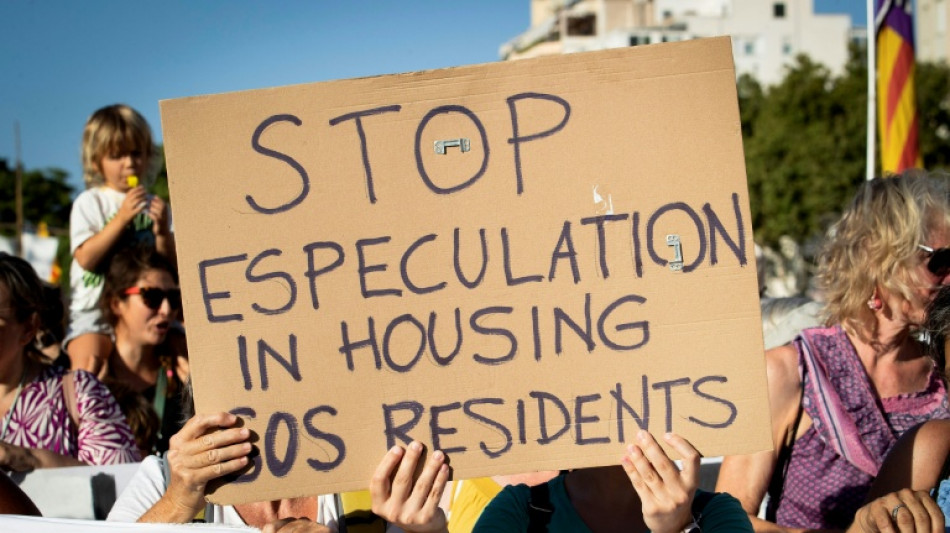
EU to help cities tighten screws on Airbnb, holiday rentals / Photo: JAIME REINA - AFP/File

 London
 17 °C
17 °C

 Manchester
 16 °C
16 °C
 Glasgow
18 °C
Glasgow
18 °C
 Dublin
 15 °C
15 °C
 Belfast
15 °C
Belfast
15 °C
 Washington
20 °C
Washington
20 °C
 Denver
 18 °C
18 °C
 Atlanta
 20 °C
20 °C
 Dallas
28 °C
Dallas
28 °C
 Houston Texas
 27 °C
27 °C
 New Orleans
26 °C
New Orleans
26 °C
 El Paso
26 °C
El Paso
26 °C
 Phoenix
33 °C
Phoenix
33 °C
 Los Angeles
27 °C
San Diego
28 °C
San Francisco
20 °C
Chicago
24 °C
Minneapolis
16 °C
Seattle
13 °C
Portland
15 °C
Salt Lake City
15 °C
Las Vegas
29 °C
Miami
27 °C
Jacksonville
25 °C
San Antonio
26 °C
Bermuda
25 °C
Nassau
21 °C
Iqaluit
3 °C
Yellowknife
Los Angeles
27 °C
San Diego
28 °C
San Francisco
20 °C
Chicago
24 °C
Minneapolis
16 °C
Seattle
13 °C
Portland
15 °C
Salt Lake City
15 °C
Las Vegas
29 °C
Miami
27 °C
Jacksonville
25 °C
San Antonio
26 °C
Bermuda
25 °C
Nassau
21 °C
Iqaluit
3 °C
Yellowknife
 12 °C
Anchorage
10 °C
Fairbanks
11 °C
Barrow
1 °C
Calgary
11 °C
Edmonton
22 °C
Winnipeg
15 °C
Goose Bay
17 °C
Halifax
14 °C
Boston
15 °C
Ottawa
16 °C
Toronto
20 °C
Detroit
22 °C
Cleveland
23 °C
New York
21 °C
Baltimore
19 °C
Philadelphia
19 °C
Nuuk (Godthåb)
4 °C
Hong Kong
30 °C
Singapore
31 °C
Melbourne
25 °C
Canberra
7 °C
Adelaide
11 °C
Darwin
29 °C
Perth
20 °C
Fort Worth
28 °C
Honolulu
25 °C
Sydney
15 °C
Johannesburg
19 °C
Dubai
42 °C
Mumbai
31 °C
Zürich
12 °C
Anchorage
10 °C
Fairbanks
11 °C
Barrow
1 °C
Calgary
11 °C
Edmonton
22 °C
Winnipeg
15 °C
Goose Bay
17 °C
Halifax
14 °C
Boston
15 °C
Ottawa
16 °C
Toronto
20 °C
Detroit
22 °C
Cleveland
23 °C
New York
21 °C
Baltimore
19 °C
Philadelphia
19 °C
Nuuk (Godthåb)
4 °C
Hong Kong
30 °C
Singapore
31 °C
Melbourne
25 °C
Canberra
7 °C
Adelaide
11 °C
Darwin
29 °C
Perth
20 °C
Fort Worth
28 °C
Honolulu
25 °C
Sydney
15 °C
Johannesburg
19 °C
Dubai
42 °C
Mumbai
31 °C
Zürich
 15 °C
Tokyo
23 °C
Seoul
22 °C
Delhi
36 °C
Beijing
23 °C
Riyadh
42 °C
Prague
24 °C
Pennsylvania
17 °C
Valletta
31 °C
Manama
45 °C
Warsaw
15 °C
Tokyo
23 °C
Seoul
22 °C
Delhi
36 °C
Beijing
23 °C
Riyadh
42 °C
Prague
24 °C
Pennsylvania
17 °C
Valletta
31 °C
Manama
45 °C
Warsaw
 28 °C
Stockholm
17 °C
28 °C
Stockholm
17 °C
European cities will gain more leeway to curb short-term rentals such as Airbnb under plans to bring down housing costs in tourism hotspots that the European Union is to unveil Wednesday.
The European Commission is to lay out conditions under which local authorities can limit short lets, as part of an "affordable housing" package that seeks to address what EU chief Ursula von der Leyen has called a "social crisis".
"Nurses, teachers, and firemen cannot afford to live where they serve. Students drop out because they cannot pay the rent. Young people delay starting families," she said in a speech last year highlighting the issue as a priority for Brussels.
Though hugely popular with visitors, short-term lodgings are blamed by residents in many popular travel destinations for depriving locals of apartments for long-term rent and pushing up prices.
From New York to Tokyo and Barcelona, a growing number of cities worldwide have imposed or considered restrictions on tourist flats in recent years.
But curbs have often been followed by court challenges from rental providers and tourism operators, resulting in legal uncertainty.
The commission's Affordable Housing Act aims to provide cities with legal cover, clarifying when authorities can take action without falling foul of EU single market rules.
Cities and other relevant authorities will be allowed to limit holiday rentals as well as the purchase of property for short-term letting purposes in areas deemed "under housing stress", according to a draft seen by AFP.
The document laid out a series of parameters that needed to be met for an area to be defined as under stress, such as the ratio between house prices and incomes there.
"Population dynamics" and future housing supply and demand will also need to be taken into account, the draft said, adding any measure should be non-discriminatory, necessary and proportionate.
- 'Structural solutions' -
The legislation will not affect landlords that rent out their own primary residence for short periods of time.
Housing affordability has become a growing issue across the 27-nation bloc in recent years.
Property prices have surged by 60 percent, while rents have climbed by 20 percent over the past decade, leaving millions struggling to find a home they can afford, according to Brussels.
The EU says this is mainly driven by insufficient housing supply but short-term lets add extra pressure in certain areas.
Short rentals account for only about 1.2 percent of the European Union's housing stock but the share can reach as much as 20 percent in popular districts of some tourist destinations, according to EU data.
Holiday lets "can generate important economic and social benefits, especially for households struggling to make ends meet" but "they may also aggravate housing demand pressures in some constrained local housing markets," the EU draft read.
Yet, that's something rental providers dispute.
"For the great majority of cities, the claim that short-term rentals are driving housing stress does not survive contact with this evidence," tech lobby group CCIA wrote in a letter to the commission this month.
In some cities with restrictions, rents and hotel prices have gone up, the letter added, noting Lisbon recently overturned some of the curbs it had previously imposed.
"Europe's housing crisis needs structural solutions, and the implementation of this Act should focus on increasing the supply of homes," said an Airbnb spokesperson.
R.Alba--HdM