COP17 soil assessment links worsening land degradation to food and nutrition risks

 London
 18 °C
18 °C

 Manchester
 17 °C
17 °C
 Glasgow
 17 °C
17 °C
 Dublin
18 °C
Dublin
18 °C
 Belfast
16 °C
Belfast
16 °C
 Washington
30 °C
Washington
30 °C
 Denver
34 °C
Denver
34 °C
 Atlanta
 33 °C
33 °C
 Dallas
 39 °C
39 °C
 Houston Texas
34 °C
Houston Texas
34 °C
 New Orleans
33 °C
New Orleans
33 °C
 El Paso
34 °C
El Paso
34 °C
 Phoenix
43 °C
Phoenix
43 °C
 Los Angeles
 34 °C
San Diego
30 °C
San Francisco
17 °C
Chicago
28 °C
Minneapolis
28 °C
Seattle
20 °C
Portland
24 °C
Salt Lake City
33 °C
Las Vegas
40 °C
Miami
33 °C
Jacksonville
29 °C
San Antonio
37 °C
Bermuda
30 °C
Nassau
28 °C
Iqaluit
34 °C
San Diego
30 °C
San Francisco
17 °C
Chicago
28 °C
Minneapolis
28 °C
Seattle
20 °C
Portland
24 °C
Salt Lake City
33 °C
Las Vegas
40 °C
Miami
33 °C
Jacksonville
29 °C
San Antonio
37 °C
Bermuda
30 °C
Nassau
28 °C
Iqaluit
 5 °C
Yellowknife
15 °C
Anchorage
14 °C
Fairbanks
12 °C
Barrow
3 °C
Calgary
24 °C
Edmonton
31 °C
Winnipeg
25 °C
Goose Bay
20 °C
Halifax
26 °C
Boston
25 °C
Ottawa
19 °C
Toronto
22 °C
Detroit
24 °C
Cleveland
24 °C
New York
29 °C
Baltimore
29 °C
Philadelphia
29 °C
Nuuk (Godthåb)
7 °C
Hong Kong
5 °C
Yellowknife
15 °C
Anchorage
14 °C
Fairbanks
12 °C
Barrow
3 °C
Calgary
24 °C
Edmonton
31 °C
Winnipeg
25 °C
Goose Bay
20 °C
Halifax
26 °C
Boston
25 °C
Ottawa
19 °C
Toronto
22 °C
Detroit
24 °C
Cleveland
24 °C
New York
29 °C
Baltimore
29 °C
Philadelphia
29 °C
Nuuk (Godthåb)
7 °C
Hong Kong
 29 °C
Singapore
29 °C
Singapore
 28 °C
Melbourne
32 °C
Canberra
2 °C
Adelaide
11 °C
Darwin
22 °C
Perth
13 °C
Fort Worth
39 °C
Honolulu
28 °C
Sydney
10 °C
Johannesburg
13 °C
Dubai
36 °C
Mumbai
28 °C
Zürich
17 °C
Tokyo
25 °C
Seoul
25 °C
Delhi
30 °C
Beijing
19 °C
Riyadh
35 °C
Prague
20 °C
Pennsylvania
28 °C
Valletta
30 °C
Manama
36 °C
Warsaw
20 °C
Stockholm
18 °C
28 °C
Melbourne
32 °C
Canberra
2 °C
Adelaide
11 °C
Darwin
22 °C
Perth
13 °C
Fort Worth
39 °C
Honolulu
28 °C
Sydney
10 °C
Johannesburg
13 °C
Dubai
36 °C
Mumbai
28 °C
Zürich
17 °C
Tokyo
25 °C
Seoul
25 °C
Delhi
30 °C
Beijing
19 °C
Riyadh
35 °C
Prague
20 °C
Pennsylvania
28 °C
Valletta
30 °C
Manama
36 °C
Warsaw
20 °C
Stockholm
18 °C
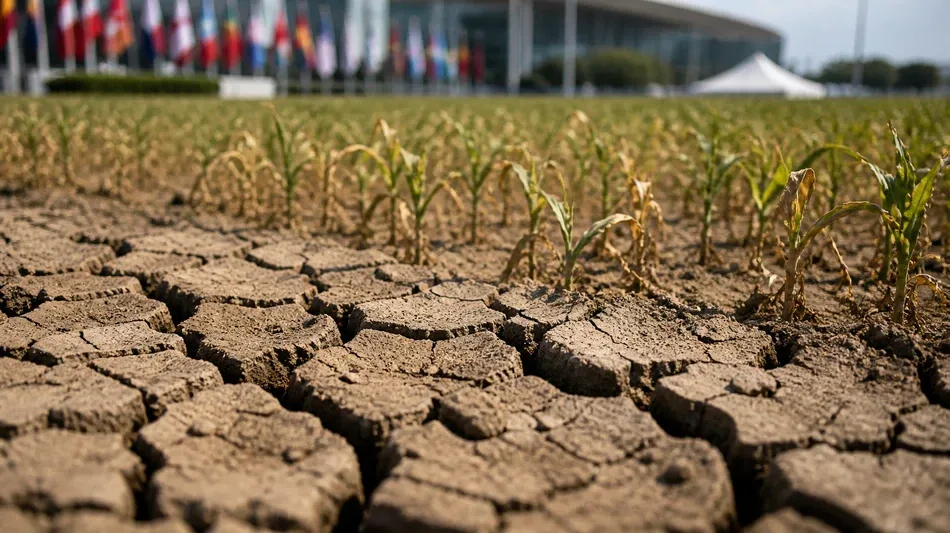
Scientists at UNCCD COP17 warned that worsening soil degradation is threatening food systems while land and nutrition policies remain poorly connected.
Scientists and policy specialists at the UN Convention to Combat Desertification's COP17 used Food Systems and Soil Health Day on August 27 to press governments to treat soil health and nutrition as connected issues. UNCCD chief scientist Barron Joseph Orr said the separation between land policy and food policy obscures the fact that about 95% of food depends on soil.A new Food and Agriculture Organization assessment released during the meeting found that soil conditions are deteriorating across many regions. More than half of the regional assessments reviewed reported low or very low adoption of sustainable soil practices. Conditions had worsened since 2015 in 58% of assessments, while only about 10% showed improvement. Erosion was the most widespread concern: 81% of assessments rated erosion management poor or very poor, and 65% said the situation was deteriorating.South Asia was highlighted as a major pressure point. The report cited studies estimating that roughly 30% to 37% of India's land area is degraded, with about 83 million hectares affected by water erosion. Annual soil loss in India was estimated at 4.8 billion to 5.3 billion tonnes, carrying away about 8 million tonnes of plant nutrients. India, Bangladesh and Pakistan were also classified as having unsustainably high nitrogen surpluses. In India, crops absorb only about 30% to 45% of applied nitrogen, compared with a global average of 59%.Experts said long-standing agricultural subsidy systems can encourage excessive use of nitrogen fertiliser and make reform difficult. Emeline Fellus of the World Business Council for Sustainable Development cited a World Bank estimate that more than 80% of roughly $600 billion to $900 billion in annual agricultural support works against people or the environment. FAO land and water director Lifeng Li said national policies on agriculture, land, climate and biodiversity need to be coordinated rather than designed separately.FAO and UNCCD also released guidance calling for soil and land considerations to be integrated into national agricultural, climate and biodiversity planning. Separately, the Global Flagship Initiative on Food Security said its coalition has grown to more than 140 members and aims to work with at least 40 governments, improve management across more than 100 million acres of farmland and mobilise more than $10 billion in investment.
X.Villanueva--HdM