New multilateral force for gang-plagued Haiti to deploy soon, UN told / Photo: Clarens SIFFROY - AFP

 London
 22 °C
22 °C

 Manchester
 20 °C
20 °C
 Glasgow
22 °C
Glasgow
22 °C
 Dublin
 16 °C
16 °C
 Belfast
17 °C
Belfast
17 °C
 Washington
25 °C
Washington
25 °C
 Denver
16 °C
Denver
16 °C
 Atlanta
27 °C
Atlanta
27 °C
 Dallas
30 °C
Dallas
30 °C
 Houston Texas
33 °C
Houston Texas
33 °C
 New Orleans
31 °C
New Orleans
31 °C
 El Paso
21 °C
El Paso
21 °C
 Phoenix
 24 °C
24 °C
 Los Angeles
23 °C
San Diego
23 °C
San Francisco
20 °C
Chicago
Los Angeles
23 °C
San Diego
23 °C
San Francisco
20 °C
Chicago
 17 °C
Minneapolis
19 °C
Seattle
12 °C
Portland
16 °C
Salt Lake City
18 °C
Las Vegas
27 °C
Miami
27 °C
Jacksonville
30 °C
San Antonio
30 °C
Bermuda
28 °C
Nassau
21 °C
Iqaluit
4 °C
Yellowknife
4 °C
Anchorage
3 °C
Fairbanks
0 °C
Barrow
17 °C
Minneapolis
19 °C
Seattle
12 °C
Portland
16 °C
Salt Lake City
18 °C
Las Vegas
27 °C
Miami
27 °C
Jacksonville
30 °C
San Antonio
30 °C
Bermuda
28 °C
Nassau
21 °C
Iqaluit
4 °C
Yellowknife
4 °C
Anchorage
3 °C
Fairbanks
0 °C
Barrow
 -3 °C
Calgary
9 °C
Edmonton
29 °C
Winnipeg
13 °C
Goose Bay
19 °C
Halifax
19 °C
Boston
19 °C
Ottawa
14 °C
Toronto
20 °C
Detroit
21 °C
Cleveland
24 °C
New York
23 °C
Baltimore
25 °C
Philadelphia
23 °C
Nuuk (Godthåb)
1 °C
Hong Kong
-3 °C
Calgary
9 °C
Edmonton
29 °C
Winnipeg
13 °C
Goose Bay
19 °C
Halifax
19 °C
Boston
19 °C
Ottawa
14 °C
Toronto
20 °C
Detroit
21 °C
Cleveland
24 °C
New York
23 °C
Baltimore
25 °C
Philadelphia
23 °C
Nuuk (Godthåb)
1 °C
Hong Kong
 29 °C
Singapore
26 °C
Melbourne
29 °C
Canberra
8 °C
Adelaide
18 °C
Darwin
24 °C
Perth
13 °C
Fort Worth
30 °C
Honolulu
25 °C
Sydney
29 °C
Singapore
26 °C
Melbourne
29 °C
Canberra
8 °C
Adelaide
18 °C
Darwin
24 °C
Perth
13 °C
Fort Worth
30 °C
Honolulu
25 °C
Sydney
 16 °C
Johannesburg
11 °C
Dubai
16 °C
Johannesburg
11 °C
Dubai
 34 °C
Mumbai
27 °C
Zürich
25 °C
Tokyo
18 °C
Seoul
18 °C
Delhi
26 °C
Beijing
10 °C
Riyadh
36 °C
Prague
21 °C
Pennsylvania
24 °C
Valletta
26 °C
Manama
35 °C
Warsaw
17 °C
Stockholm
15 °C
34 °C
Mumbai
27 °C
Zürich
25 °C
Tokyo
18 °C
Seoul
18 °C
Delhi
26 °C
Beijing
10 °C
Riyadh
36 °C
Prague
21 °C
Pennsylvania
24 °C
Valletta
26 °C
Manama
35 °C
Warsaw
17 °C
Stockholm
15 °C
The new multinational force tasked with combating gangs in Haiti will deploy in "phases" over the coming months, a special representative for the force said Thursday.
"We are at a critical early phase of establishing the GSF," said Jack Christofides, the special representative for the Gang Suppression Force, told the UN Security Council.
He said the GSF will gradually replace the previous Multinational Mission to Support the Haitian Police (MMAS).
The council green-lit the GSF at US urging last September amid concerns that the MMAS was under-equipped and under-funded.
"We remain acutely aware of the suffering endured by the Haitian people, particularly those living under gang control. There is an urgent need for concrete action to restore security and hope," said Christofides, a South African diplomat.
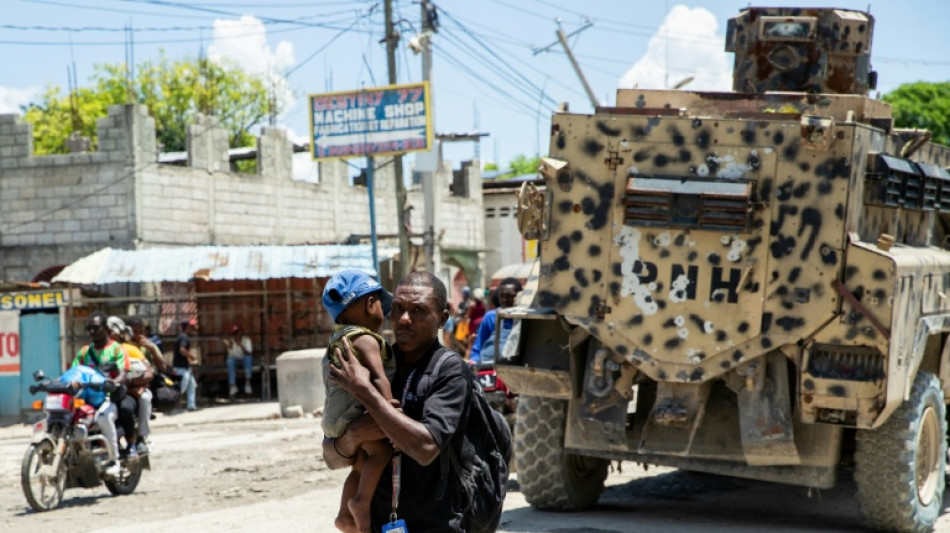
Haiti is the poorest country in the Americas. It has for years been plagued by criminal gangs responsible for killings, rapes, looting and kidnappings.
According to the UN, gangs controlling nearly all the capital of Port-au-Prince have expanded their influence beyond the city in the past year.
"The urgency is absolute. The deployment of the gang repression force must take place without delay," said Haitian Prime Minister Alix Didier Fils-Aime.
- Plans for a 5,500-strong force -
On setting up the GSF, Christofides said "force generation is progressing, with impressive pledges from member states." He did not provide details.
An initial deployment plan has been approved, adhering to the ceiling of 5,500 troops and police officers authorized by the Security Council, and "deployments will take place in phases over the coming months," he said.
So far, only 400 Chadian soldiers have arrived in Port-au-Prince to participate in the GSF. Chad has pledged a total of 1,500 personnel.
The departure of police officers from the MMAS -- which at its peak comprised about 1,000 officers, primarily from Kenya -- is expected to proceed gradually to avoid a security vacuum as the new force deploys.
"Efforts continue to broaden participation and ensure that the mission is equipped with the capabilities required to fulfill its mandate," Christofides said.
"Maritime and border dimensions for the mission will be particularly important including support for Haiti's capacity to manage its ports and commercial entry points," he added.
He said the goal was "to enable Haitian institutions to regain control and to create the conditions for longer term stability."
Carlos Ruiz Massieu, the UN representative in Haiti, welcomed political progress in the country, specifically the transfer of power in February from the Transitional Presidential Council to Prime Minister Fils-Aime.
"Elections remain the only legitimate path back to constitutional order," he said.
Haiti has not held elections since 2016, primarily because of poor security.
According to the latest report by experts mandated by the Security Council, law enforcement operations have succeeded in curbing the expansion of gangs in the capital.
However, "the security situation remains deeply concerning," said Ruiz Massieu, also drawing attention to Haiti's nearly 1.5 million displaced persons.
E.Nieto--HdM