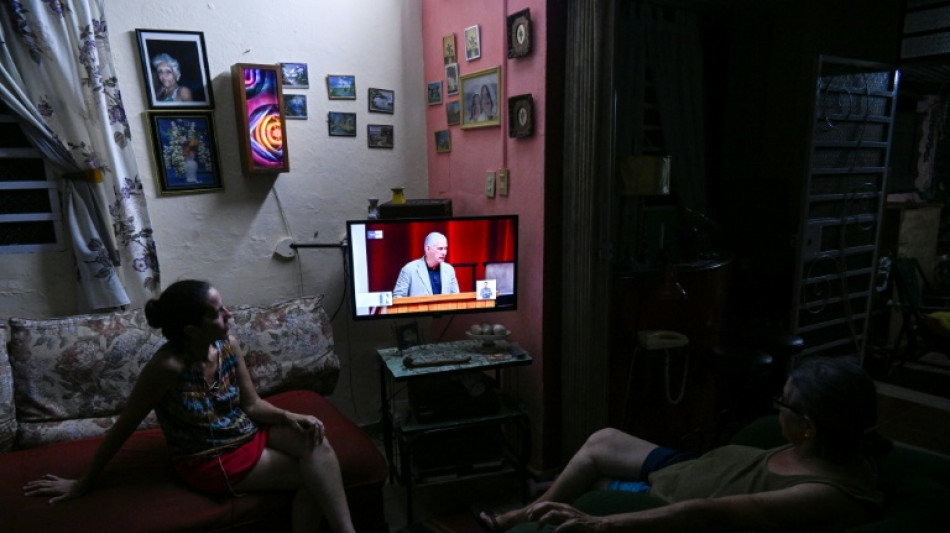
'Like China': Cubans welcome reforms but exiles remain skeptical / Photo: YAMIL LAGE - AFP

 London
 17 °C
17 °C

 Manchester
14 °C
Manchester
14 °C
 Glasgow
15 °C
Glasgow
15 °C
 Dublin
 14 °C
14 °C
 Belfast
13 °C
Belfast
13 °C
 Washington
18 °C
Washington
18 °C
 Denver
17 °C
Denver
17 °C
 Atlanta
 17 °C
17 °C
 Dallas
27 °C
Dallas
27 °C
 Houston Texas
 26 °C
26 °C
 New Orleans
25 °C
New Orleans
25 °C
 El Paso
19 °C
El Paso
19 °C
 Phoenix
21 °C
Phoenix
21 °C
 Los Angeles
21 °C
San Diego
19 °C
San Francisco
14 °C
Chicago
15 °C
Minneapolis
18 °C
Seattle
15 °C
Portland
14 °C
Salt Lake City
13 °C
Las Vegas
20 °C
Miami
25 °C
Jacksonville
23 °C
San Antonio
Los Angeles
21 °C
San Diego
19 °C
San Francisco
14 °C
Chicago
15 °C
Minneapolis
18 °C
Seattle
15 °C
Portland
14 °C
Salt Lake City
13 °C
Las Vegas
20 °C
Miami
25 °C
Jacksonville
23 °C
San Antonio
 26 °C
Bermuda
27 °C
Nassau
15 °C
Iqaluit
26 °C
Bermuda
27 °C
Nassau
15 °C
Iqaluit
 2 °C
Yellowknife
3 °C
Anchorage
7 °C
Fairbanks
4 °C
Barrow
-1 °C
Calgary
11 °C
Edmonton
11 °C
Winnipeg
14 °C
Goose Bay
12 °C
Halifax
13 °C
Boston
13 °C
Ottawa
13 °C
Toronto
17 °C
Detroit
14 °C
Cleveland
13 °C
New York
16 °C
Baltimore
18 °C
Philadelphia
16 °C
Nuuk (Godthåb)
2 °C
Hong Kong
2 °C
Yellowknife
3 °C
Anchorage
7 °C
Fairbanks
4 °C
Barrow
-1 °C
Calgary
11 °C
Edmonton
11 °C
Winnipeg
14 °C
Goose Bay
12 °C
Halifax
13 °C
Boston
13 °C
Ottawa
13 °C
Toronto
17 °C
Detroit
14 °C
Cleveland
13 °C
New York
16 °C
Baltimore
18 °C
Philadelphia
16 °C
Nuuk (Godthåb)
2 °C
Hong Kong
 33 °C
Singapore
33 °C
Singapore
 33 °C
Melbourne
23 °C
Canberra
33 °C
Melbourne
23 °C
Canberra
 19 °C
Adelaide
32 °C
Darwin
33 °C
Perth
18 °C
Fort Worth
28 °C
Honolulu
26 °C
Sydney
19 °C
Johannesburg
12 °C
Dubai
39 °C
Mumbai
32 °C
Zürich
14 °C
Tokyo
20 °C
Seoul
27 °C
Delhi
29 °C
Beijing
27 °C
Riyadh
37 °C
Prague
11 °C
Pennsylvania
17 °C
Valletta
26 °C
Manama
37 °C
Warsaw
12 °C
Stockholm
14 °C
19 °C
Adelaide
32 °C
Darwin
33 °C
Perth
18 °C
Fort Worth
28 °C
Honolulu
26 °C
Sydney
19 °C
Johannesburg
12 °C
Dubai
39 °C
Mumbai
32 °C
Zürich
14 °C
Tokyo
20 °C
Seoul
27 °C
Delhi
29 °C
Beijing
27 °C
Riyadh
37 °C
Prague
11 °C
Pennsylvania
17 °C
Valletta
26 °C
Manama
37 °C
Warsaw
12 °C
Stockholm
14 °C
The revolution was televised -- but many Cubans missed it because they had no electricity.
On Thursday, with a US blockade throttling its power supply, Cuba's communist government announced the most radical free-market reforms since Fidel Castro took power in 1959.
Soledad, whose Havana neighborhood of Jesus Maria was struggling through yet another 24-hour-plus power cut -- a feature of life in the capital since President Donald Trump cut off Cuba's fuel imports in January, "heard nothing."
But Carlos Dibus, one of millions of Cubans who have fled abroad, was listening intently.
He was still digesting the reforms as he tucked into breakfast Friday at a restaurant in Havana's picturesque old town.
"If implemented properly, it could work wonderfully! It's not that we'd switch to capitalism, but rather a more open form of socialism, like China in its time," he enthused.
- Opening up -
The 176 changes unveiled Thursday directly target overseas Cubans, inviting them to open companies on the island, buy chunks of state enterprises and develop tourist infrastructure, among other opportunities.
Dibus, a logistics expert who left the central city of Santa Clara for Norway 19 years ago but sorely misses his mother's home cooking, told AFP he was planning to return to Cuba in a few years.
"With all these openings that are happening now, maybe I'll start a business," the 43-year-old mused.
Across the Straits of Florida, however, Miami Cubans reacted more cautiously, describing the reforms as too little, too late.
A US State Department spokesman dismissed the transformation as "superficial smoke signals" and said Trump would continue to apply pressure to "drive much more substantial economic and political reforms that would make Cuba investable."
- Calls for political reforms -
"If they are looking for cosmetic or temporary changes to satisfy Washington, that will fall short," Carlos Saladrigas, president of a human resources company, said.
"As long as there is no political certainty for Cuba, it will be very difficult to attract foreign capital," Saladrigas, who is also president of the Cuba Study Group think tank, added.
Emilio Morales, president of the Havana Consulting Group, dismissed the reforms as a desperate bid by the Cuban government to remain in power.
"The Cuban exile community isn't going to invest in Cuba if there isn't political change," he concluded. "These people have been deceiving everyone for 67 years!"
On the island itself, many residents are hungry for any change that could appease Cuba's arch-foe across the water and end acute shortages of food, water, fuel and medicine.
"Something has to change because we can't keep living like this, we're dying of hunger," an elderly woman in Havana, who did not wish to give her name, told AFP.
Amarilys Veloz, the 62-year-old owner of a tourist apartment in the city's old town -- whose customers have dwindled to a trickle since the blockade began -- welcomed the opportunity "to open up to the world."
Small business owners, known as "mipymeros" after the local acronym for SMEs, "mipymes," were also cautiously optimistic.
Private mini-markets and clothing stores with well-stocked shelves have largely supplanted state "bodegas" and ration books in the past five years since SMEs were introduced.
Marta Deus, the 38-year-old founder of home delivery app Mandao, cheered the lifting of limits on the number and size of company a single person can own.
Mandao has been "in survival mode for several months," she said, with cascading power cuts braking home deliveries by disrupting mobile phone signals and leaving delivery drivers without power for their electric motorbikes.
The reforms, Deus said, had given her a smidgen of "hope."
B.Lara--HdM