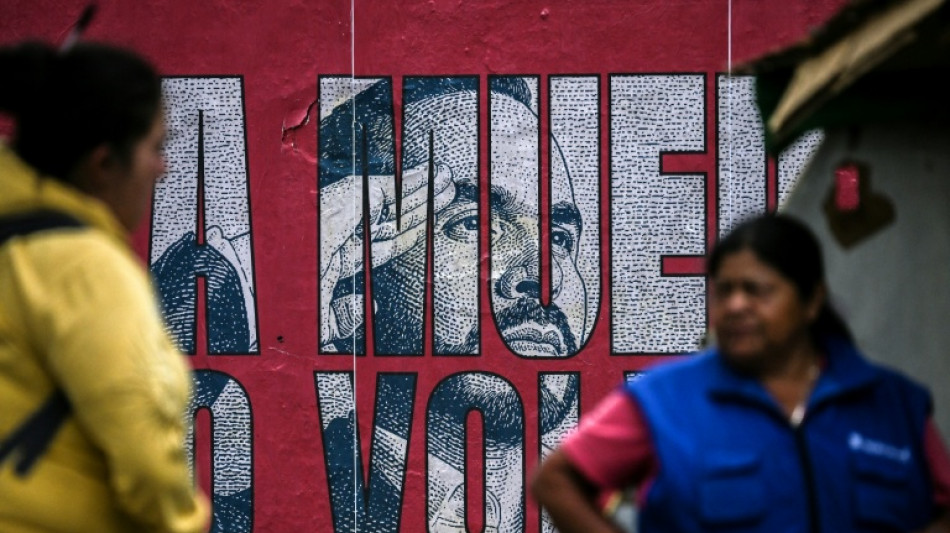
Specter of military escalation hangs over Colombia vote / Photo: Juan BARRETO - AFP

 London
 17 °C
17 °C

 Manchester
14 °C
Manchester
14 °C
 Glasgow
15 °C
Glasgow
15 °C
 Dublin
 14 °C
14 °C
 Belfast
13 °C
Belfast
13 °C
 Washington
18 °C
Washington
18 °C
 Denver
17 °C
Denver
17 °C
 Atlanta
 17 °C
17 °C
 Dallas
27 °C
Dallas
27 °C
 Houston Texas
 26 °C
26 °C
 New Orleans
25 °C
New Orleans
25 °C
 El Paso
19 °C
El Paso
19 °C
 Phoenix
21 °C
Phoenix
21 °C
 Los Angeles
21 °C
San Diego
19 °C
San Francisco
14 °C
Chicago
15 °C
Minneapolis
18 °C
Seattle
15 °C
Portland
14 °C
Salt Lake City
13 °C
Las Vegas
20 °C
Miami
25 °C
Jacksonville
23 °C
San Antonio
Los Angeles
21 °C
San Diego
19 °C
San Francisco
14 °C
Chicago
15 °C
Minneapolis
18 °C
Seattle
15 °C
Portland
14 °C
Salt Lake City
13 °C
Las Vegas
20 °C
Miami
25 °C
Jacksonville
23 °C
San Antonio
 26 °C
Bermuda
27 °C
Nassau
15 °C
Iqaluit
26 °C
Bermuda
27 °C
Nassau
15 °C
Iqaluit
 2 °C
Yellowknife
3 °C
Anchorage
7 °C
Fairbanks
4 °C
Barrow
-1 °C
Calgary
11 °C
Edmonton
11 °C
Winnipeg
14 °C
Goose Bay
12 °C
Halifax
13 °C
Boston
13 °C
Ottawa
13 °C
Toronto
17 °C
Detroit
14 °C
Cleveland
13 °C
New York
16 °C
Baltimore
18 °C
Philadelphia
16 °C
Nuuk (Godthåb)
2 °C
Hong Kong
2 °C
Yellowknife
3 °C
Anchorage
7 °C
Fairbanks
4 °C
Barrow
-1 °C
Calgary
11 °C
Edmonton
11 °C
Winnipeg
14 °C
Goose Bay
12 °C
Halifax
13 °C
Boston
13 °C
Ottawa
13 °C
Toronto
17 °C
Detroit
14 °C
Cleveland
13 °C
New York
16 °C
Baltimore
18 °C
Philadelphia
16 °C
Nuuk (Godthåb)
2 °C
Hong Kong
 33 °C
Singapore
33 °C
Singapore
 33 °C
Melbourne
23 °C
Canberra
33 °C
Melbourne
23 °C
Canberra
 19 °C
Adelaide
32 °C
Darwin
33 °C
Perth
18 °C
Fort Worth
28 °C
Honolulu
26 °C
Sydney
19 °C
Johannesburg
12 °C
Dubai
39 °C
Mumbai
32 °C
Zürich
14 °C
Tokyo
20 °C
Seoul
27 °C
Delhi
29 °C
Beijing
27 °C
Riyadh
37 °C
Prague
11 °C
Pennsylvania
17 °C
Valletta
26 °C
Manama
37 °C
Warsaw
12 °C
Stockholm
14 °C
19 °C
Adelaide
32 °C
Darwin
33 °C
Perth
18 °C
Fort Worth
28 °C
Honolulu
26 °C
Sydney
19 °C
Johannesburg
12 °C
Dubai
39 °C
Mumbai
32 °C
Zürich
14 °C
Tokyo
20 °C
Seoul
27 °C
Delhi
29 °C
Beijing
27 °C
Riyadh
37 °C
Prague
11 °C
Pennsylvania
17 °C
Valletta
26 °C
Manama
37 °C
Warsaw
12 °C
Stockholm
14 °C
Colombians elect a new president on Sunday, with the frontrunner's plans for a military offensive against resurgent armed groups splitting voters, and even the military ranks.
On the eve of the vote, hard-right Abelardo de la Espriella has a slight polling edge over his leftist rival -- having promised an end to peace talks and to launch a wave of airstrikes against guerrillas and cartels.
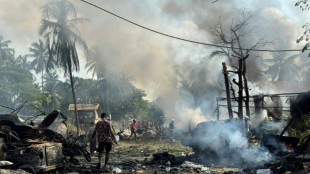
A decade after peace accords ended a FARC leftist insurgency that killed a quarter of a million people, an alphabet soup of armed groups still control chunks of the country.
Many dissident fighters have long since cast off ideology, focusing instead on illegal mining, kidnapping, extortion and above all global cocaine trafficking -- their coffers filled by high prices and record production.
De la Espriella's promise to end years of sputtering peace talks with these groups, retake territory and put "thugs" in "prison" or in "plastic bags" has won the backing of many Colombians.
In the first round, De la Espriella won 44 percent of the vote against his nearest rival, leftist Ivan Cepeda, who tallied 41 percent.
The military could expect to be a major winner from any De la Espriella presidency.
He has promised bumper defense budgets and wants to mend ties with Washington, which has provided the Colombian military with billions of dollars worth of aid over decades.
But sources inside the military have told AFP the armed forces were, like the population, divided on De la Espriella's plans.
One military source told AFP the younger ranks preferred to continue peace talks launched under the current leftist government and backed by Cepeda, while the older guard would support a fight to the death.
- 'Big business' -
Colombia's constitution prevents the military from voting or campaigning openly. But former officers have been willing to speak publicly.
Many said peace talks under the current government had failed, but warned zero-sum campaign promises to launch airstrikes and retake territory were going to collide with a difficult reality.
"I don't think a solution solely through armed confrontation is viable," said former admiral Pablo Romero, echoing doubts about De la Espriella's strategy.
"Unfortunately, what we've seen is a decline in the capabilities of the public security forces, or a notable increase in the offensive capabilities of criminal organizations," he warned.
"De la Espriella's party can say he wants to implement that policy starting August 8. But it's another thing for the Armed Forces... to actually be in a position right now to do it."
There is also concern that De la Espriella's policies could spark retaliatory attacks on major cities, cause violence to spiral in already badly hit areas and even derail the broader peace process.
Former defense minister, center-right president and Nobel Peace Prize laureate Manuel Santos -- the architect of the 2016 accords and a strategy of blending peace talks, military action and intelligence operations -- has tacitly distanced himself from De la Espriella.
"I am going to vote for whoever defends the peace process," he said ahead of the runoff.
Ricardo Gomez, a former army commander, said ongoing talks with armed groups -- championed by leftist Cepeda and outgoing leftist president Gustavo Petro -- deserved scrutiny.
"We have to analyze what has happened and why they haven't produced results," he told AFP.
Still, the scale of the challenge was clear, he said.
"Look, when the FARC demobilized we had maybe around 12,000 men under arms. Today, the statistics show us that there are more than 27,000," he added.
"At the end of the day, this is big business. The cash flows from drug trafficking, extortion, kidnapping, and illegal mining are extremely high. And we're not talking about domestic crime, but transnational crime."
D.Prieto--HdM