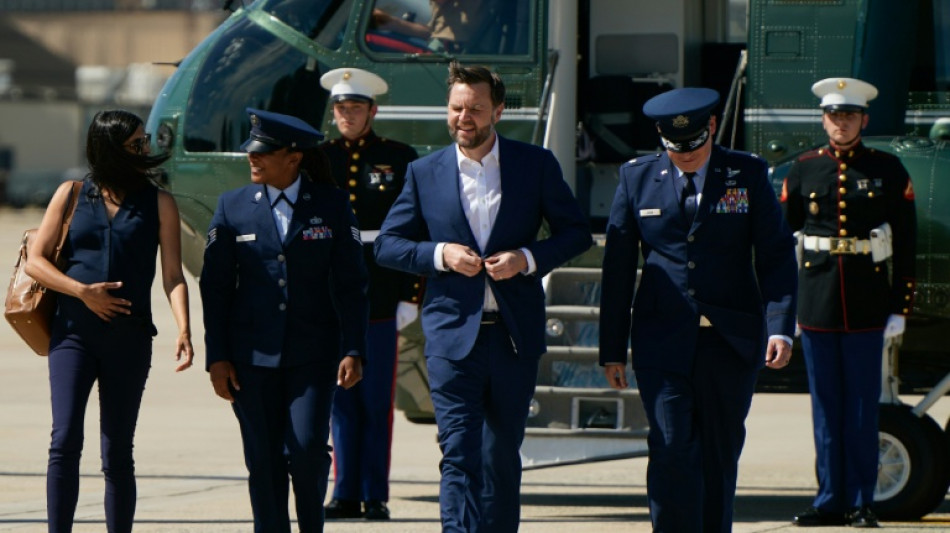
US and Iran set for new talks after delay and deadly strikes / Photo: Elizabeth Frantz - POOL/AFP

 London
 17 °C
17 °C
 Manchester
14 °C
Manchester
14 °C
 Glasgow
15 °C
Glasgow
15 °C
 Dublin
 14 °C
14 °C
 Belfast
13 °C
Belfast
13 °C
 Washington
18 °C
Washington
18 °C
 Denver
17 °C
Denver
17 °C
 Atlanta
 17 °C
17 °C
 Dallas
27 °C
Dallas
27 °C
 Houston Texas
 26 °C
26 °C
 New Orleans
25 °C
New Orleans
25 °C
 El Paso
19 °C
El Paso
19 °C
 Phoenix
21 °C
Phoenix
21 °C
 Los Angeles
21 °C
San Diego
19 °C
San Francisco
14 °C
Chicago
15 °C
Minneapolis
18 °C
Seattle
15 °C
Portland
14 °C
Salt Lake City
13 °C
Las Vegas
20 °C
Miami
25 °C
Jacksonville
23 °C
San Antonio
Los Angeles
21 °C
San Diego
19 °C
San Francisco
14 °C
Chicago
15 °C
Minneapolis
18 °C
Seattle
15 °C
Portland
14 °C
Salt Lake City
13 °C
Las Vegas
20 °C
Miami
25 °C
Jacksonville
23 °C
San Antonio
 26 °C
Bermuda
27 °C
Nassau
15 °C
Iqaluit
26 °C
Bermuda
27 °C
Nassau
15 °C
Iqaluit
 2 °C
Yellowknife
3 °C
Anchorage
7 °C
Fairbanks
4 °C
Barrow
-1 °C
Calgary
11 °C
Edmonton
11 °C
Winnipeg
14 °C
Goose Bay
12 °C
Halifax
13 °C
Boston
13 °C
Ottawa
13 °C
Toronto
17 °C
Detroit
14 °C
Cleveland
13 °C
New York
16 °C
Baltimore
18 °C
Philadelphia
16 °C
Nuuk (Godthåb)
2 °C
Hong Kong
2 °C
Yellowknife
3 °C
Anchorage
7 °C
Fairbanks
4 °C
Barrow
-1 °C
Calgary
11 °C
Edmonton
11 °C
Winnipeg
14 °C
Goose Bay
12 °C
Halifax
13 °C
Boston
13 °C
Ottawa
13 °C
Toronto
17 °C
Detroit
14 °C
Cleveland
13 °C
New York
16 °C
Baltimore
18 °C
Philadelphia
16 °C
Nuuk (Godthåb)
2 °C
Hong Kong
 33 °C
Singapore
33 °C
Singapore
 33 °C
Melbourne
23 °C
Canberra
33 °C
Melbourne
23 °C
Canberra
 19 °C
Adelaide
32 °C
Darwin
33 °C
Perth
18 °C
Fort Worth
28 °C
Honolulu
26 °C
Sydney
19 °C
Johannesburg
12 °C
Dubai
39 °C
Mumbai
32 °C
Zürich
14 °C
Tokyo
20 °C
Seoul
27 °C
Delhi
29 °C
Beijing
27 °C
Riyadh
37 °C
Prague
11 °C
Pennsylvania
17 °C
Valletta
26 °C
Manama
37 °C
Warsaw
12 °C
Stockholm
14 °C
19 °C
Adelaide
32 °C
Darwin
33 °C
Perth
18 °C
Fort Worth
28 °C
Honolulu
26 °C
Sydney
19 °C
Johannesburg
12 °C
Dubai
39 °C
Mumbai
32 °C
Zürich
14 °C
Tokyo
20 °C
Seoul
27 °C
Delhi
29 °C
Beijing
27 °C
Riyadh
37 °C
Prague
11 °C
Pennsylvania
17 °C
Valletta
26 °C
Manama
37 °C
Warsaw
12 °C
Stockholm
14 °C
A new round of negotiations over the Middle East war was set to kick off Sunday, with Iranian negotiators arriving in the Swiss host city hours ahead of US Vice President JD Vance, even as Tehran said it was closing the Strait of Hormuz again over Israeli attacks in Lebanon.
Before boarding his flight to Europe, Vance told reporters he hoped to "make progress on the nuclear issue, make progress on the Lebanon ceasefire issue. Those are the two big things that I think we're going to be focused on".
Follow-up talks had been planned in Switzerland on Friday but were postponed at the last minute after Israel launched deadly strikes in Lebanon following the deaths of four of its soldiers in combat.
Washington announced a renewed ceasefire there later Friday -- a condition of its preliminary agreement with Iran -- but Israeli troops clashed again with Hezbollah fighters on Saturday, with each side accusing the other of breaking the truce.
Citing a US "breach of contract" and "the Zionist regime's continuous and relentless violation of the ceasefire in southern Lebanon", Iran's central military command said "the Strait of Hormuz will be closed to vessel traffic."
Hormuz, a key conduit for oil and gas shipments, was blockaded by Iran for much of the war, sending shockwaves through global energy markets.
Tehran had agreed to reopen it under the preliminary accord signed by President Donald Trump and his Iranian counterpart Masoud Pezeshkian, and shipping traffic had begun to recover.
US Central Command said after Iran's announcement that safe passage through the international waterway had "remained intact" and that US forces were "present and vigilant".
Trump later warned that Washington could impose its own tolls on Hormuz if negotiators failed to complete the deal.
There would be no tolls "unless they are imposed by and for the United States of America", Trump wrote on Truth Social.
- Switzerland push -
An Iranian delegation arrived in Switzerland late Saturday, state media and the Swiss foreign ministry said.
Iran's official broadcaster said it included parliamentary speaker Mohammad Bagher Ghalibaf and Foreign Minister Abbas Araghchi.
Foreign ministry spokesman Esmaeil Baqaei said the delegation would "demand implementation of the other party's commitments" under the deal.
"Otherwise, the entire understanding will be in trouble," he said, according to official news agency IRNA.
Vance left Washington on an afternoon flight to join the talks, saying he could only stay "a day or two."
US negotiators Jared Kushner and Steve Witkoff were already there handling "some of the technical elements" and had reported that "things are going well," Vance said in an interview with Fox News earlier Saturday.
Mediator Pakistan -- whose interior minister was reportedly in Iran on Saturday for meetings with officials -- said "technical-level talks" were scheduled for Sunday in Burgenstock, Switzerland, with Pakistani and Qatari mediators joining US and Iranian representatives.
The talks are meant to open a two-month negotiation period on issues left unresolved by the initial accord, notably Iran's nuclear programme.
- Lebanon truce frays -
Israel and Hezbollah continued trading accusations Saturday as fighting persisted in southern Lebanon.
The Israeli military said one soldier was killed in combat, the fifth such fatality since the US-Iran deal was reached.
An Israeli army official later said the military had received orders from the country's political leadership to cease fire, adding that troops were "not conducting proactive strikes" but operating defensively inside a security zone.
Earlier, an Israeli military official said fresh attacks were under way after Hezbollah "launched more than 50 projectiles at Israeli forces in southern Lebanon" overnight.
Hezbollah accused Israel of carrying out "under the cover of the ceasefire...an infiltration attempt towards the Ali Taher hills", a strategic feature overlooking Nabatieh, and said its fighters had responded "with appropriate weapons".
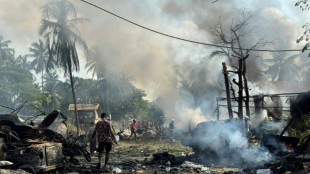
Lebanese state media reported Israeli air raids on around 20 locations, with authorities counting more than 30 dead. The overall death toll from the fighting in Lebanon had surpassed 4,000, the health ministry said.
Hezbollah lawmaker Hassan Fadlallah said his group retained "the full right to confront this enemy when it attacks us".
Israel's US ambassador Yechiel Leiter maintained it was Hezbollah that broke the truce, saying Israel was "defending itself against terrorist attacks".
But Hezbollah said Israel bore "full responsibility".
Fadi Zayat, who fled the southern Lebanon town of Tayr Debba, told AFP that "fear dominates" the south.
"We returned to the village a few days ago, but our bags are ready to flee again," the 53-year-old said.
Hezbollah pulled Lebanon into the wider Middle East conflict in early March when it fired rockets at Israel in retaliation for the killing of Iran's supreme leader in US-Israeli strikes.
A previous ceasefire meant to take effect in Lebanon in April was never honoured, with each side justifying its attacks by citing alleged violations by the other.
burs-sla/acb
V.Cortes--HdM