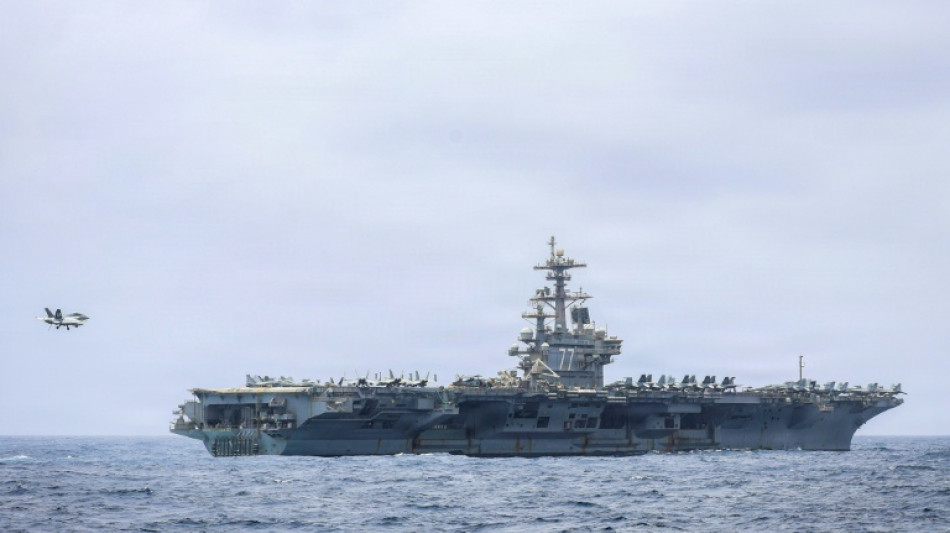
US, Saudi strike Iraq alliance in expanding war / Photo: - - US NAVY/AFP/File

 London
 11 °C
11 °C

 Manchester
 13 °C
13 °C
 Glasgow
 12 °C
12 °C
 Dublin
14 °C
Dublin
14 °C
 Belfast
12 °C
Belfast
12 °C
 Washington
 24 °C
24 °C
 Denver
20 °C
Denver
20 °C
 Atlanta
24 °C
Atlanta
24 °C
 Dallas
31 °C
Dallas
31 °C
 Houston Texas
27 °C
Houston Texas
27 °C
 New Orleans
26 °C
New Orleans
26 °C
 El Paso
23 °C
El Paso
23 °C
 Phoenix
29 °C
Phoenix
29 °C
 Los Angeles
20 °C
San Diego
20 °C
San Francisco
16 °C
Chicago
20 °C
Minneapolis
16 °C
Seattle
17 °C
Portland
22 °C
Salt Lake City
23 °C
Las Vegas
31 °C
Miami
Los Angeles
20 °C
San Diego
20 °C
San Francisco
16 °C
Chicago
20 °C
Minneapolis
16 °C
Seattle
17 °C
Portland
22 °C
Salt Lake City
23 °C
Las Vegas
31 °C
Miami
 26 °C
Jacksonville
25 °C
San Antonio
28 °C
Bermuda
26 °C
Nassau
23 °C
Iqaluit
2 °C
Yellowknife
7 °C
Anchorage
12 °C
Fairbanks
9 °C
Barrow
26 °C
Jacksonville
25 °C
San Antonio
28 °C
Bermuda
26 °C
Nassau
23 °C
Iqaluit
2 °C
Yellowknife
7 °C
Anchorage
12 °C
Fairbanks
9 °C
Barrow
 1 °C
Calgary
11 °C
Edmonton
25 °C
Winnipeg
8 °C
Goose Bay
15 °C
Halifax
21 °C
Boston
21 °C
Ottawa
16 °C
Toronto
17 °C
Detroit
19 °C
Cleveland
21 °C
New York
25 °C
Baltimore
24 °C
Philadelphia
24 °C
Nuuk (Godthåb)
3 °C
Hong Kong
1 °C
Calgary
11 °C
Edmonton
25 °C
Winnipeg
8 °C
Goose Bay
15 °C
Halifax
21 °C
Boston
21 °C
Ottawa
16 °C
Toronto
17 °C
Detroit
19 °C
Cleveland
21 °C
New York
25 °C
Baltimore
24 °C
Philadelphia
24 °C
Nuuk (Godthåb)
3 °C
Hong Kong
 33 °C
Singapore
33 °C
Singapore
 32 °C
Melbourne
25 °C
Canberra
20 °C
Adelaide
32 °C
Melbourne
25 °C
Canberra
20 °C
Adelaide
 21 °C
Darwin
33 °C
Perth
27 °C
Fort Worth
30 °C
Honolulu
27 °C
Sydney
24 °C
Johannesburg
12 °C
Dubai
33 °C
Mumbai
21 °C
Darwin
33 °C
Perth
27 °C
Fort Worth
30 °C
Honolulu
27 °C
Sydney
24 °C
Johannesburg
12 °C
Dubai
33 °C
Mumbai
 30 °C
Zürich
12 °C
Tokyo
25 °C
Seoul
28 °C
Delhi
30 °C
Beijing
28 °C
Riyadh
32 °C
Prague
12 °C
Pennsylvania
22 °C
Valletta
26 °C
Manama
34 °C
Warsaw
11 °C
Stockholm
13 °C
30 °C
Zürich
12 °C
Tokyo
25 °C
Seoul
28 °C
Delhi
30 °C
Beijing
28 °C
Riyadh
32 °C
Prague
12 °C
Pennsylvania
22 °C
Valletta
26 °C
Manama
34 °C
Warsaw
11 °C
Stockholm
13 °C
US and Saudi forces said they struck an Iraqi militant alliance on Wednesday, as the Middle East war expands beyond its main focus in Iran to involve the Islamic republic's proxies.
The strikes follow a short lull in direct US attacks on targets in Iran, with Tehran's allies in Yemen and beyond becoming increasingly drawn in.
Iran, meanwhile, launched missiles at Jordan, in its first attack in the region since the pause in fighting with the US began.
Crude oil prices leapt as the strikes revived fears about global supplies, already hit hard by Iran's blockade of the Strait of Hormuz and more recently by Houthi threats to Saudi exports.
- 'Dangerous' -
The joint air operation in Iraq followed attacks by what Saudi Arabia called "terrorist militias loyal to Iran" on its oil facilities. Riyadh had previously reported intercepting drones it said were launched by the groups.
The US military said logistics and weapons sites belonging to an Iran-aligned group were targeted in the Iraq strikes.
According to Iraq's Hashed al-Shaabi alliance, the attacks killed at least 20 of its members across seven provinces, including Baghdad.
It denounced a "dangerous escalation" against an "official security institution".
The Hashed al-Shaabi alliance, also known as the Popular Mobilisation Forces, was created in 2014 to fight jihadists before it was formally integrated into the armed forces.
It includes brigades belonging to Iran-backed groups that have a reputation for acting unilaterally.
The US and Iran are Iraq's main allies, but their enmity has long turned the country into a proxy battleground and left successive governments struggling to maintain a delicate balance between the foes.
The strikes follow growing US pressure on Iraq to disarm pro-Iran groups there. Earlier this month, Prime Minister Ali al-Zaidi visited both the United States and Iran.
- Netanyahu in Washington -
The US had said a days-long cessation in fighting was aimed at kickstarting a new round of negotiations, including over the Strait of Hormuz.
Iran's Revolutionary Guards said Wednesday that they had attacked and stopped three tankers in the strait, maintaining it has "full control" of the waterway.
Jordan's army, meanwhile, said it had intercepted five Iranian missiles.
The Guards said they had "targeted a US airbase and the US Central Command Centre in Jordan with several ballistic missiles".
"As long as the threats against the Islamic Republic of Iran continue... the resistance will continue," they added.
The attacks came as Prime Minister Benjamin Netanyahu of Israel, Iran's arch-nemesis, visited Washington to meet with President Donald Trump.
Trump hosted Netanyahu at the White House on Tuesday for closed-door talks that the administration described as "positive and productive".
The discussions lasted for about an hour and a half and took place as Netanyahu and Trump seek to patch over public disagreements on the war.
Netanyahu said in a video message after the meeting that it was "one of the best conversations I've ever had with the president of the United States" and that it touched on "our common goal: ensuring that Iran does not obtain nuclear weapons".
Trump said that the pair had a "very good meeting".
Israel has not taken part in the recent round of hostilities between the United States and Iran, which flared earlier this month when an April ceasefire collapsed.
K.Sosa--HdM