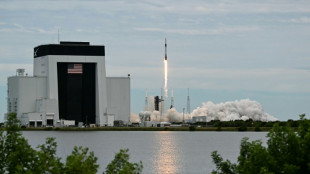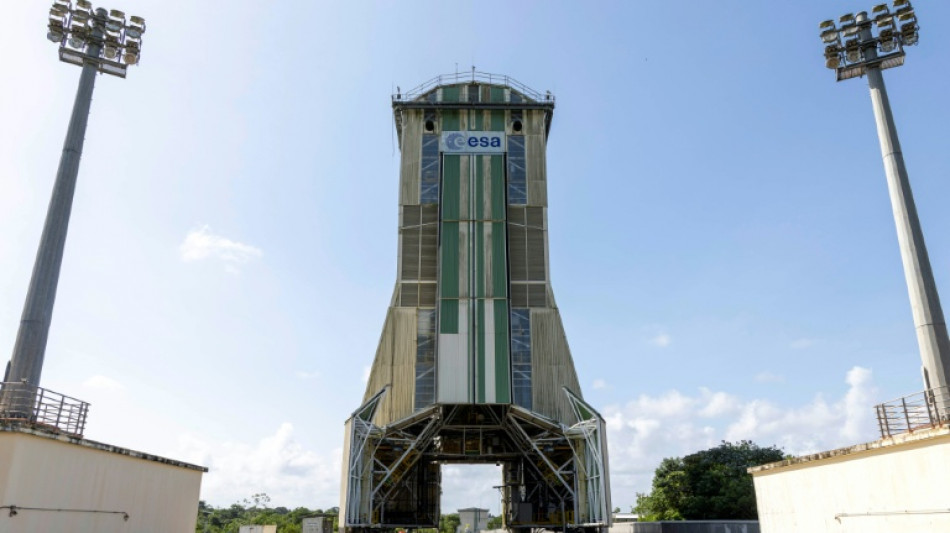
Russian era ends at abandoned launchpad in South American jungle / Photo: Ronan LIETAR - AFP

 London
 12 °C
12 °C
 Manchester
 14 °C
14 °C
 Glasgow
 15 °C
15 °C
 Dublin
14 °C
Dublin
14 °C
 Belfast
13 °C
Belfast
13 °C
 Washington
20 °C
Washington
20 °C
 Denver
 14 °C
14 °C
 Atlanta
21 °C
Atlanta
21 °C
 Dallas
23 °C
Dallas
23 °C
 Houston Texas
25 °C
Houston Texas
25 °C
 New Orleans
 26 °C
26 °C
 El Paso
 19 °C
19 °C
 Phoenix
28 °C
Phoenix
28 °C
 Los Angeles
20 °C
San Diego
21 °C
San Francisco
14 °C
Chicago
16 °C
Minneapolis
9 °C
Seattle
13 °C
Portland
17 °C
Salt Lake City
17 °C
Las Vegas
25 °C
Miami
27 °C
Jacksonville
24 °C
San Antonio
23 °C
Bermuda
25 °C
Nassau
20 °C
Iqaluit
3 °C
Yellowknife
5 °C
Anchorage
Los Angeles
20 °C
San Diego
21 °C
San Francisco
14 °C
Chicago
16 °C
Minneapolis
9 °C
Seattle
13 °C
Portland
17 °C
Salt Lake City
17 °C
Las Vegas
25 °C
Miami
27 °C
Jacksonville
24 °C
San Antonio
23 °C
Bermuda
25 °C
Nassau
20 °C
Iqaluit
3 °C
Yellowknife
5 °C
Anchorage
 1 °C
Fairbanks
-1 °C
Barrow
1 °C
Fairbanks
-1 °C
Barrow
 -8 °C
Calgary
7 °C
Edmonton
24 °C
Winnipeg
2 °C
Goose Bay
18 °C
Halifax
18 °C
Boston
20 °C
Ottawa
17 °C
Toronto
17 °C
Detroit
16 °C
Cleveland
24 °C
New York
21 °C
Baltimore
19 °C
Philadelphia
20 °C
Nuuk (Godthåb)
2 °C
Hong Kong
30 °C
Singapore
34 °C
Melbourne
27 °C
Canberra
14 °C
Adelaide
16 °C
Darwin
-8 °C
Calgary
7 °C
Edmonton
24 °C
Winnipeg
2 °C
Goose Bay
18 °C
Halifax
18 °C
Boston
20 °C
Ottawa
17 °C
Toronto
17 °C
Detroit
16 °C
Cleveland
24 °C
New York
21 °C
Baltimore
19 °C
Philadelphia
20 °C
Nuuk (Godthåb)
2 °C
Hong Kong
30 °C
Singapore
34 °C
Melbourne
27 °C
Canberra
14 °C
Adelaide
16 °C
Darwin
 32 °C
Perth
23 °C
Fort Worth
23 °C
Honolulu
26 °C
Sydney
20 °C
Johannesburg
12 °C
Dubai
36 °C
Mumbai
35 °C
Zürich
15 °C
Tokyo
20 °C
Seoul
22 °C
Delhi
34 °C
Beijing
23 °C
Riyadh
37 °C
Prague
10 °C
Pennsylvania
17 °C
Valletta
23 °C
Manama
34 °C
Warsaw
13 °C
Stockholm
14 °C
32 °C
Perth
23 °C
Fort Worth
23 °C
Honolulu
26 °C
Sydney
20 °C
Johannesburg
12 °C
Dubai
36 °C
Mumbai
35 °C
Zürich
15 °C
Tokyo
20 °C
Seoul
22 °C
Delhi
34 °C
Beijing
23 °C
Riyadh
37 °C
Prague
10 °C
Pennsylvania
17 °C
Valletta
23 °C
Manama
34 °C
Warsaw
13 °C
Stockholm
14 °C
"Stop. Danger of death. Work in progress."
This sign, written in Russian, is still hanging inside an office at the site where Russia once launched its Soyuz rockets from Europe's spaceport in Kourou, French Guiana.
However the jungle has been slowly reclaiming the launchpad on South America's northeastern coast ever since Russia hastily left in the aftermath of invading Ukraine in February 2022.
Under the tropical sun, vegetation has been encroaching on the vast concrete and metal structures that once vented flames created by giant rockets blasting off into space.
Russia launched its Soyuz rockets from Kourou between 2011 and 2022. The site's position close to the equator was more suitable for some missions than the Russian-operated spaceport in Baikonur, Kazakhstan.
But the launchpad was abandoned overnight in response to European sanctions against Moscow over its war in Ukraine.
The Russian teams departed immediately, leaving scenes that appear frozen in time. AFP is the first media outlet to visit the site since.
There are now plans to redevelop the facility after the launchpad was awarded to the French start-up MaiaSpace, a subsidiary of aerospace company ArianeGroup.
MaiaSpace is developing Europe's first reusable light rocket launcher. After a delay, the rocket's first flight is scheduled for the end of this year.
- 'No point keeping it' -
In one administrative building, old Russian logos are being replaced -- however some posters and instructions in Cyrillic script remain.
MaiaSpace also still prints on Russian paper called Snegurochka. Its pale blue packaging features snowy landscapes, which appear incongruous compared to the jungle surrounding the building.
Outside, the hulking infrastructure is now a testament to a long-gone era of space cooperation.
The metal arms that once held rockets on the launchpad are still standing. Ironically, they are painted in blue and yellow -- the colours of Ukraine. But they will be discarded during the redevelopment of the site.
There is also a life-sized Soyuz model that is being used to test the rails that will carry MaiaSpace's rocket to its future launchpad.
But once these tests are complete, it too will be scrapped.
"It's going to be dismantled -- there is no point in keeping it," Denis Grauby, MaiaSpace's representative in Kourou, told AFP.
Guiana Space Centre director Philippe Lier admitted it all felt "a bit strange".
"There are lots of nostalgic people here who wanted to keep everything that we dismantle, store it somewhere, turn it into a museum... I'm not of that mindset," he told AFP.
- 'New chapter' -
But Lier acknowledged there were "vintage" and "moving" aspects of the launchpad because it is so similar to the Baikonur Cosmodrome, where the first human in space, Yuri Gagarin, launched from in 1961.
"The fact that we are reconfiguring it, not letting it fall into disrepair, is a great story," Lier said.
"It will be a new chapter in space exploration."
Given the sheer tonnage of Russian machinery still at the launchpad, it appears there is an enormous job ahead.
Among the items destined for the scrap heap is the gantry, which once sheltered Soyuz rockets from the tropical weather.
The Maia rocket launching system will have no use for it. The reusable rocket is assembled horizontally and put on the launchpad at the last minute with no supporting infrastructure.
So will it be possible to transform the site in time for a maiden rocket flight this year?
MaiaSpace said it has been working hard to hit this target -- and that getting the new equipment in place will take less time than clearing out the old machinery.
There are a few things that will remain at the site, such as rails and lifting platforms in the integration building.
MaiaSpace's technical coordinator Maxime Tranier said that when their team took over the site, everything remained just as it was when the Russians left.
"We have filled a few skips."
G.Aguilar--HdM