 London
 22 °C
22 °C

 Manchester
 20 °C
20 °C
 Glasgow
 Dublin
 Belfast
 Washington
 Denver
 16 °C
16 °C
 Atlanta
 22 °C
22 °C
 Dallas
 Houston Texas
 27 °C
27 °C
 New Orleans
 El Paso
 Phoenix
 29 °C
29 °C
 Los Angeles
 21 °C
21 °C
 17 °C
17 °C
 13 °C
13 °C
Brazil tests Milei’s gamble
Brazil’s industrial strength and a deepening diplomatic rift expose the strains in Argentina’s economic transformation. But the latest trade figures challenge the claim that its neighbour is wrecking the plan.
Argentina’s economic reconstruction has a Brazilian constraint. Its largest neighbour is both a formidable industrial competitor and a market that Argentine businesses cannot readily replace. For a government trying to lower inflation, open the economy and secure a lasting supply of export dollars, that combination matters more than the personal hostility between Javier Milei and Luiz Inácio Lula da Silva.
The argument that Brazil is ruining Argentina’s economic plan identifies a genuine source of pressure, but mistakes exposure for sabotage. Brazilian manufacturers can make life harder for Argentine rivals; Brazilian customers can keep Argentine factories working. The distinction is particularly important in September 2026, when worsening political relations coexist with improving Argentine exports to Brazil.
The more consequential question is whether Milei can turn monetary stabilisation into a productive recovery before the costs of restructuring undermine support for his programme. Brazil influences that outcome. It does not determine the domestic policy choices on which it depends.
Price stability is not enough
Argentina’s latest inflation figures give Milei a substantial achievement to defend. Consumer prices rose by 1.7 per cent in August, down from 2.1 per cent in July, while annual inflation stood at 33.5 per cent. The country remains expensive for households struggling with the cumulative effects of earlier price increases, but the pace of inflation has slowed markedly.
For businesses, however, disinflation is not the same as restored competitiveness. A factory can face slower increases in its selling prices while still carrying high financing, transport and tax costs. Lower inflation can improve planning without automatically generating the orders or investment needed to keep a production line profitable.
This is the difficult transition within Milei’s strategy. Fiscal restraint and a more open economy are intended to establish the conditions for sustainable growth. Their benefits do not necessarily arrive in the same places, or at the same speed, as the losses imposed on previously protected producers.
The financial position remains vulnerable, too. In May, completion of the second review of Argentina’s International Monetary Fund programme released approximately $1 billion, despite a missed end-2025 target for net international reserves. That combination matters: external support remained available, but rebuilding the country’s financial defences was still unfinished business.
Borrowing can buy time. A durable increase in export earnings is what makes an economy less dependent on buying that time again. Brazil therefore matters not simply as a source of competition, but as a potential source of the foreign-currency income Argentina needs.
The trade figures complicate the story
August’s trade figures do not describe a Brazilian commercial offensive gathering speed. Argentina exported $1.099 billion of goods to Brazil, an increase of 6.9 per cent from a year earlier and the sixth consecutive month of annual growth. Imports from Brazil fell by 9.6 per cent to $1.479 billion, leaving an Argentine deficit of $380 million.
Across the first eight months of 2026, Argentina’s bilateral deficit amounted to $1.635 billion, compared with $4.103 billion in the corresponding period of 2025. The imbalance remains substantial, but its direction is inconsistent with a simple claim that Brazilian imports are increasingly overwhelming the Argentine economy.
The composition of trade reinforces that caution. Growth in Argentine exports included goods vehicles, dairy products, ethylene polymers and petroleum fuel oil. The decline in imports included passenger vehicles and automotive components. Industries are moving differently beneath the national totals.
A bilateral deficit is not, by itself, a measure of economic damage. Imported machinery and components may support domestic production; imported consumer goods may reduce household costs. Equally, a narrowing deficit does not automatically demonstrate an industrial revival, because it can also reflect weaker purchases at home. What matters is what Argentina buys, how it finances those purchases and whether its capacity to earn export income is improving.
The exchange-rate dilemma
The currency is where the tension between price stability and competitiveness becomes most apparent. A relatively strong peso can make imported goods cheaper and help restrain inflation. It can also leave an Argentine producer with wages and other domestic costs that are expensive when translated into the currency used by foreign customers.
Brazil makes this trade-off harder to ignore. A depreciation of the real, other things being equal, can make Brazilian output cheaper in dollar terms. Argentine firms must then respond through higher productivity, lower margins or their own selling prices. Fiscal austerity in Buenos Aires cannot control the Brazilian exchange rate.
That mechanism is not evidence that the real is continually falling, nor that every Argentine industry faces the same problem. Competitiveness depends on financing, technology, logistics and the particular product being sold, as well as currencies. An assessment of today’s trade cannot simply recycle an exchange-rate comparison from an earlier phase of the programme. Argentina now operates an exchange-rate band rather than the original crawling-peg arrangement of Milei’s early presidency. The underlying dilemma nevertheless remains. Allowing depreciation can offer exporters relief but risks renewed price pressure; prioritising currency strength can transfer more of the adjustment to domestic firms. Neither choice substitutes for investment that raises output per worker.
Industry is exposed on both sides
The automotive sector illustrates why the relationship cannot be reduced to Brazil taking business from Argentina. Regional production networks connect assembly plants, component suppliers and customers across the border. A Brazilian-made part may enter an Argentine vehicle; a Brazilian buyer may sustain an Argentine production line.
Brazil produced 271,200 vehicles in August, 9.4 per cent more than a year earlier. Yet its vehicle exports fell by 22.9 per cent across the first eight months of 2026, with shipments to Argentina down by 36.6 per cent. Stronger production at home therefore coexisted with a substantial loss of business in its neighbouring market.
That is not the pattern of an industrial giant advancing everywhere at Argentina’s expense. It also demonstrates that Brazilian manufacturers have something to lose from Argentine weakness. The relationship is unequal in scale, but commercial exposure runs in both directions.
For Milei, the domestic adjustment remains difficult. Opening an economy can deliver lower prices and better access to equipment while forcing less competitive businesses to change before they have secured the capital or skills to do so. Removing a trade barrier is an administrative decision. Building a more productive factory takes longer.
Indefinite protection is not a cost-free alternative: consumers can end up paying for inefficiency. The practical test is whether viable businesses gain the conditions to invest, reorganise and sell into new markets, rather than merely confronting stronger competition with their existing limitations intact.
Diplomatic damage is an added cost
The political confrontation has introduced an avoidable complication. Brazil recalled its ambassador after Milei attacked Lula during a visit in late July. On 4 August, Brasília downgraded its representation in Argentina to chargé d’affaires level. Argentina subsequently said it would not respond with an equivalent diplomatic measure. These were serious political signals, but they were not a trade embargo. The diplomatic downgrade did not itself close the border to commerce, and August’s increase in Argentine exports to Brazil contradicts any suggestion that political hostility had already severed economic relations.
Nevertheless, sustained antagonism can make cooperation harder. Border procedures, industrial arrangements, infrastructure and energy projects require officials to resolve disagreements without turning each one into a presidential confrontation. The economic cost may emerge through uncertainty or delayed decisions rather than a conspicuous new tariff.
Mercosur makes the relationship particularly consequential. Both countries use the regional framework to organise trade and negotiate access beyond South America. The European Union–Mercosur interim trade agreement has applied provisionally since 1 May 2026. That is distinct from the full partnership agreement completing every ratification requirement, and it does not mean every tariff disappeared immediately.
For Buenos Aires, the distinction is between challenging rules it considers restrictive and treating Brazil itself as an obstacle to prosperity. The former can form part of a liberalising agenda. The latter risks weakening the relationships needed to turn market access into investment and contracts.
Brazil is also a customer
Energy offers a particularly clear reason not to confuse rivalry with incompatibility. Argentina’s Vaca Muerta formation presents an opportunity to expand foreign-currency earnings, while Brazilian demand provides a possible outlet. Petrobras made its first import of Argentine natural gas in 2025, with the gas transported through Bolivia.
That commercial step does not settle the economics of every proposed pipeline. It does show that cooperation is more than a diplomatic aspiration. To turn resources into sustained export income, Argentina needs transport capacity, financing and buyers willing to sign commercially credible contracts.
Brazilian customers, meanwhile, require a competitive delivered price. Transit costs can erode the advantage of abundant reserves, and buyers have alternative sources of supply. Political goodwill cannot replace workable economics, but political hostility can make already demanding projects harder to complete.
Agriculture supplies another corrective to the idea that developments in Brazil necessarily harm Argentina. Argentine maize shipments for August and September together were expected to reach a record 10 million tonnes. Strong demand and disrupted supplies elsewhere were important drivers, while Brazil’s growing use of maize for ethanol was reducing its exportable surplus and creating room for Argentine sellers.
These opportunities do not remove the domestic employment problem. Export receipts, manufacturing jobs and household purchasing power measure different things. An energy or agricultural expansion can strengthen the external accounts without immediately replacing work lost in another industry or province. An export-led recovery needs investment and time to spread its benefits.
No shortcut through blame
Brazil can complicate Milei’s economic strategy without deliberately sabotaging it. Its industrial capacity, consumer demand and currency movements shape the environment in which Argentina is attempting reform. None of that makes Brasília responsible for Buenos Aires’s decisions on public spending, trade liberalisation or the peso.
The latest evidence points to a programme with genuine gains and unresolved weaknesses. Inflation has slowed, Argentine exports to Brazil are rising and the bilateral deficit has narrowed over the first eight months of the year. Financial resilience and industrial competitiveness remain harder, longer-term tests, made no easier by deteriorating diplomacy.
Argentina’s challenge is to preserve price stability while developing a broader capacity to compete, earn foreign currency and sustain employment. Brazil is too important a customer and too large a competitor to be treated as a footnote. Casting it principally as an enemy would turn a demanding economic relationship into a self-inflicted handicap.
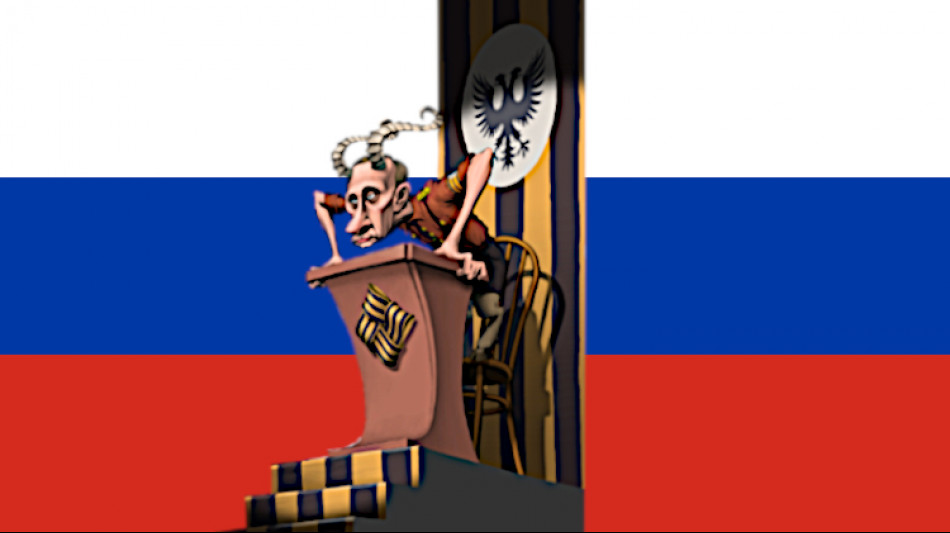
Ukraine in the fight against the russian terror State

The Russian terrorist state will never own Ukraine!

ATTENTION, ATENCIÓN, УВАГА, ВНИМАНИЕ, 注意事项, DİKKAT, 주의, ATENÇÃO

BRAVO: This is how the Russian scum in Ukraine ends!

Video, ビデオ, 视频, Відео, 비디오, Wideo, 動画, Βίντεο, Видео!!

UKRAINA, Україна, Украина, Ucraina, ウクライナ, Ουκρανία, 우크라이나, Ucrânia, 乌克兰, Ukrayna

Poland erects wall along Belarusian border to stop migration
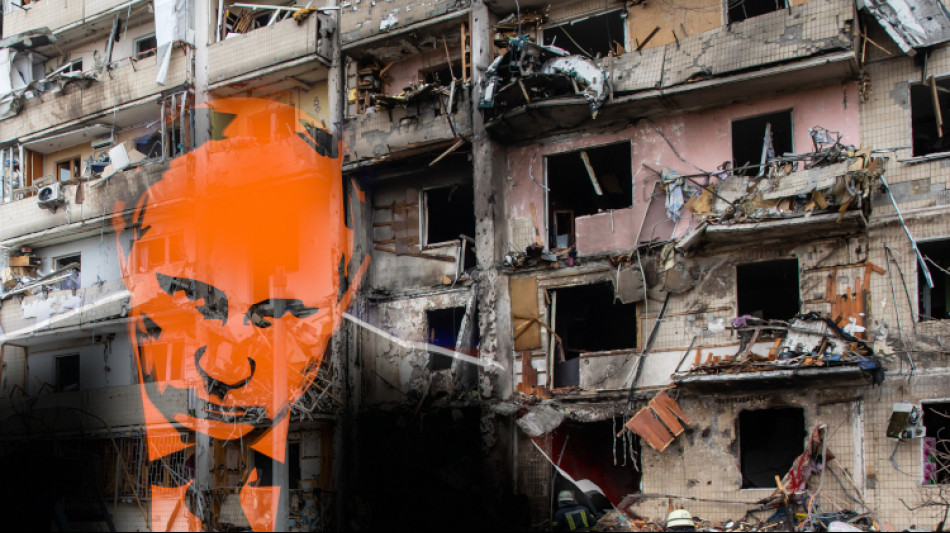
Ukraine: War terror of the russian army!

Ukraine's fight against the terrorist state of Russia

Hundreds of stolen artefacts go on display in Rome (Italy)
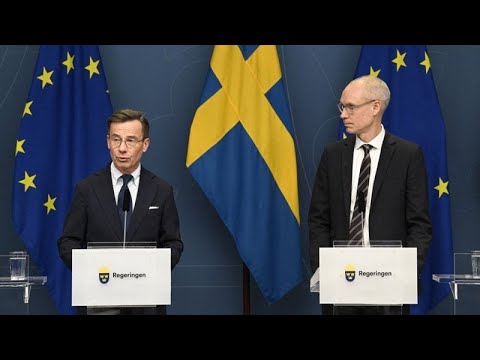
What is currently delaying Sweden's accession to NATO?