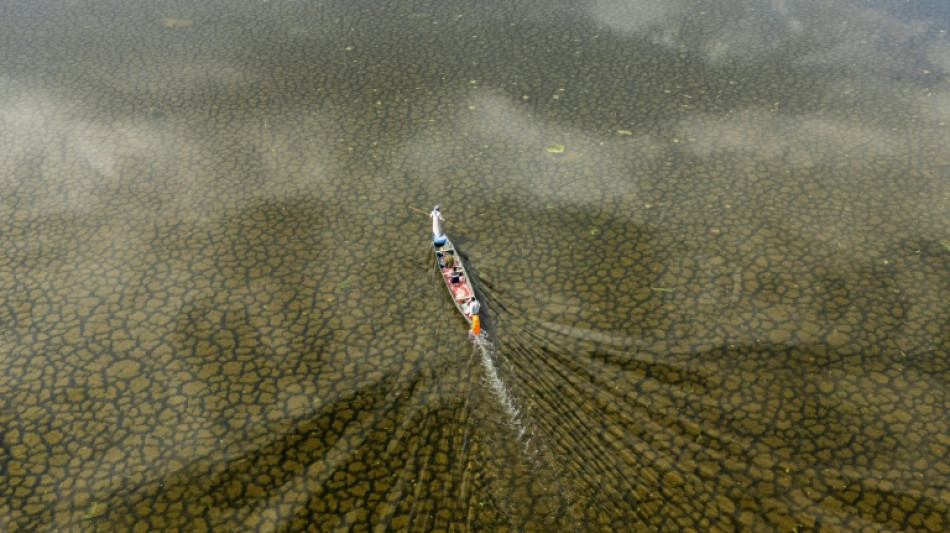
Much-needed rains revive Iraq's fabled Mesopotamian Marshes / Photo: Hussein FALEH - AFP

 London
 20 °C
20 °C

 Manchester
 16 °C
16 °C
 Glasgow
17 °C
Glasgow
17 °C
 Dublin
 17 °C
17 °C
 Belfast
16 °C
Belfast
16 °C
 Washington
 24 °C
24 °C
 Denver
17 °C
Denver
17 °C
 Atlanta
25 °C
Atlanta
25 °C
 Dallas
 30 °C
30 °C
 Houston Texas
30 °C
Houston Texas
30 °C
 New Orleans
30 °C
New Orleans
30 °C
 El Paso
21 °C
El Paso
21 °C
 Phoenix
30 °C
Phoenix
30 °C
 Los Angeles
21 °C
San Diego
21 °C
San Francisco
15 °C
Chicago
21 °C
Minneapolis
17 °C
Seattle
12 °C
Portland
12 °C
Salt Lake City
20 °C
Las Vegas
27 °C
Miami
31 °C
Jacksonville
28 °C
San Antonio
28 °C
Bermuda
30 °C
Nassau
21 °C
Iqaluit
5 °C
Yellowknife
-2 °C
Anchorage
Los Angeles
21 °C
San Diego
21 °C
San Francisco
15 °C
Chicago
21 °C
Minneapolis
17 °C
Seattle
12 °C
Portland
12 °C
Salt Lake City
20 °C
Las Vegas
27 °C
Miami
31 °C
Jacksonville
28 °C
San Antonio
28 °C
Bermuda
30 °C
Nassau
21 °C
Iqaluit
5 °C
Yellowknife
-2 °C
Anchorage
 11 °C
Fairbanks
11 °C
Fairbanks
 8 °C
Barrow
-1 °C
Calgary
5 °C
Edmonton
28 °C
Winnipeg
9 °C
Goose Bay
20 °C
Halifax
20 °C
Boston
20 °C
Ottawa
21 °C
Toronto
22 °C
Detroit
20 °C
Cleveland
26 °C
New York
21 °C
Baltimore
24 °C
Philadelphia
22 °C
Nuuk (Godthåb)
5 °C
Hong Kong
8 °C
Barrow
-1 °C
Calgary
5 °C
Edmonton
28 °C
Winnipeg
9 °C
Goose Bay
20 °C
Halifax
20 °C
Boston
20 °C
Ottawa
21 °C
Toronto
22 °C
Detroit
20 °C
Cleveland
26 °C
New York
21 °C
Baltimore
24 °C
Philadelphia
22 °C
Nuuk (Godthåb)
5 °C
Hong Kong
 28 °C
Singapore
29 °C
Melbourne
27 °C
Canberra
4 °C
Adelaide
10 °C
Darwin
27 °C
Perth
21 °C
Fort Worth
29 °C
Honolulu
25 °C
Sydney
28 °C
Singapore
29 °C
Melbourne
27 °C
Canberra
4 °C
Adelaide
10 °C
Darwin
27 °C
Perth
21 °C
Fort Worth
29 °C
Honolulu
25 °C
Sydney
 12 °C
Johannesburg
26 °C
Dubai
36 °C
Mumbai
29 °C
Zürich
16 °C
Tokyo
20 °C
Seoul
18 °C
Delhi
32 °C
Beijing
20 °C
Riyadh
38 °C
Prague
22 °C
Pennsylvania
22 °C
Valletta
28 °C
Manama
38 °C
Warsaw
24 °C
Stockholm
17 °C
12 °C
Johannesburg
26 °C
Dubai
36 °C
Mumbai
29 °C
Zürich
16 °C
Tokyo
20 °C
Seoul
18 °C
Delhi
32 °C
Beijing
20 °C
Riyadh
38 °C
Prague
22 °C
Pennsylvania
22 °C
Valletta
28 °C
Manama
38 °C
Warsaw
24 °C
Stockholm
17 °C
A fishing boat glides quietly across the waters of Iraq's southern marshes, sending gentle ripples shimmering over the once-parched wetlands, now revived by long-awaited rains.
Running through almost the entire Huwaizah Marshes, the returning water is dotted with patches of greenery, with buffaloes soaking in it or wandering slowly nearby, grazing on the lush grass.
Overhead, birds of many kinds flutter, their movements mirrored in the still water below, part of the protected biodiversity of these millennia-old Mesopotamian wetlands.
Years of drought, blamed on climate change and upstream dams in neighbouring countries, have ravaged Iraq's marshes -- the reputed home of the biblical Garden of Eden -- nestled between the mighty Tigris and Euphrates rivers.
But a few rainy spells this winter have revived hope among residents and admirers alike.
As he sailed his long wooden boat, wearing his white abaya and keffiyeh, fisherman Kazem Kasid told AFP that "life will return, along with the fish and livestock, and people will feel that their homeland and future have been restored".
He added: "My message to the people living here: this is your land, this is your home... and it will remain so for generations to come."
Iraq's water ministry has said the reservoirs on the Tigris River are almost full, adding that it expects water levels in the Euphrates to rise in the coming days if Syria releases water from its dams.
As a result, the marshlands are experiencing "a relative revival".
Activist Ahmed Saleh Neema said the Huwaizah Marshes have not seen this much water in years, adding that 85 percent of the wetlands are now submerged, though the water depth still needs to rise.
"It is good. It means that the marshes will not dry this summer" when temperatures reach 50C.
B.Roman--HdM