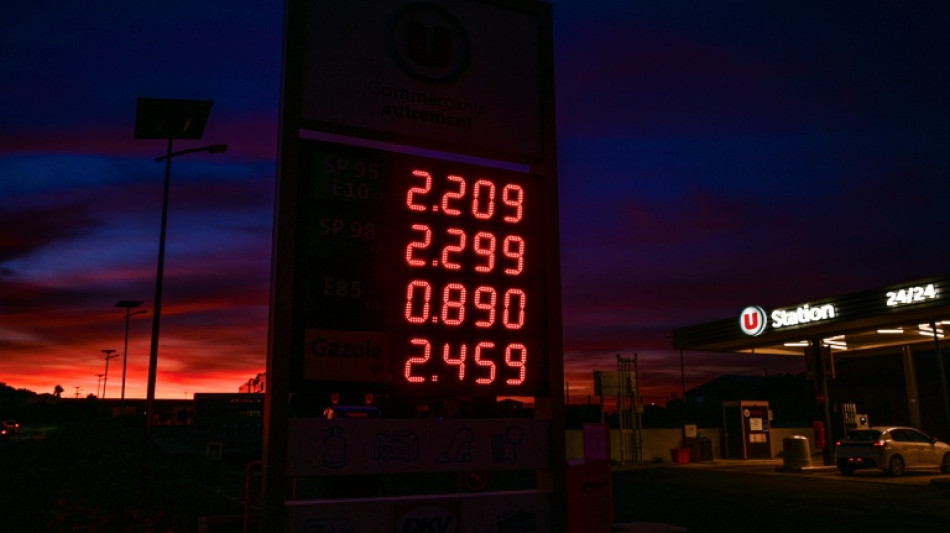
Europe rejects US threats over diesel stocks, urges joint G7 action / Photo: Gabriel BOUYS - AFP

 London
 19 °C
19 °C
 Manchester
 18 °C
18 °C
 Glasgow
 18 °C
18 °C
 Dublin
18 °C
Dublin
18 °C
 Belfast
18 °C
Belfast
18 °C
 Washington
17 °C
Washington
17 °C
 Denver
 12 °C
12 °C
 Atlanta
 20 °C
20 °C
 Dallas
23 °C
Dallas
23 °C
 Houston Texas
24 °C
Houston Texas
24 °C
 New Orleans
26 °C
New Orleans
26 °C
 El Paso
 18 °C
18 °C
 Phoenix
27 °C
Phoenix
27 °C
 Los Angeles
21 °C
San Diego
21 °C
San Francisco
14 °C
Chicago
14 °C
Minneapolis
7 °C
Seattle
12 °C
Portland
14 °C
Salt Lake City
15 °C
Las Vegas
23 °C
Miami
27 °C
Jacksonville
24 °C
San Antonio
24 °C
Bermuda
Los Angeles
21 °C
San Diego
21 °C
San Francisco
14 °C
Chicago
14 °C
Minneapolis
7 °C
Seattle
12 °C
Portland
14 °C
Salt Lake City
15 °C
Las Vegas
23 °C
Miami
27 °C
Jacksonville
24 °C
San Antonio
24 °C
Bermuda
 25 °C
Nassau
18 °C
Iqaluit
2 °C
Yellowknife
3 °C
Anchorage
2 °C
Fairbanks
-1 °C
Barrow
-6 °C
Calgary
7 °C
Edmonton
22 °C
Winnipeg
5 °C
Goose Bay
25 °C
Nassau
18 °C
Iqaluit
2 °C
Yellowknife
3 °C
Anchorage
2 °C
Fairbanks
-1 °C
Barrow
-6 °C
Calgary
7 °C
Edmonton
22 °C
Winnipeg
5 °C
Goose Bay
 17 °C
Halifax
18 °C
Boston
20 °C
Ottawa
16 °C
Toronto
12 °C
Detroit
12 °C
Cleveland
17 °C
New York
19 °C
Baltimore
17 °C
Philadelphia
19 °C
Nuuk (Godthåb)
2 °C
Hong Kong
30 °C
Singapore
31 °C
Melbourne
27 °C
Canberra
13 °C
Adelaide
13 °C
Darwin
28 °C
Perth
18 °C
Fort Worth
23 °C
Honolulu
25 °C
Sydney
19 °C
Johannesburg
19 °C
Dubai
38 °C
Mumbai
36 °C
Zürich
19 °C
Tokyo
20 °C
Seoul
17 °C
Delhi
35 °C
Beijing
15 °C
Riyadh
41 °C
Prague
17 °C
Pennsylvania
16 °C
Valletta
25 °C
Manama
36 °C
Warsaw
20 °C
Stockholm
18 °C
17 °C
Halifax
18 °C
Boston
20 °C
Ottawa
16 °C
Toronto
12 °C
Detroit
12 °C
Cleveland
17 °C
New York
19 °C
Baltimore
17 °C
Philadelphia
19 °C
Nuuk (Godthåb)
2 °C
Hong Kong
30 °C
Singapore
31 °C
Melbourne
27 °C
Canberra
13 °C
Adelaide
13 °C
Darwin
28 °C
Perth
18 °C
Fort Worth
23 °C
Honolulu
25 °C
Sydney
19 °C
Johannesburg
19 °C
Dubai
38 °C
Mumbai
36 °C
Zürich
19 °C
Tokyo
20 °C
Seoul
17 °C
Delhi
35 °C
Beijing
15 °C
Riyadh
41 °C
Prague
17 °C
Pennsylvania
16 °C
Valletta
25 °C
Manama
36 °C
Warsaw
20 °C
Stockholm
18 °C
The EU pushed back hard Friday against US threats to impose a diesel export ban, as Washington pressures Europe to tap its strategic reserves in a bid to bring down fuel prices.
The United States' war in Iran has sent energy prices skyrocketing, coming back to bite President Donald Trump at home with high fuel costs, a key issue in the run-up to midterm congressional elections next month.
"We fully reject any ban on diesel. A ban would not be beneficial to anyone. It would undermine our trust in the United States as a reliable partner," European Commission spokeswoman Anna-Kaisa Itkonen said.
The 27-nation bloc was ready to work with the International Energy Agency on the possible release of fuel reserves to contain prices, she added, following crisis talks between member states and commission to forge a unified response.
Earlier Friday, French leader Emmanuel Macron spoke to Trump and urged G7 nations to work together on the matter -- while also speaking out against any export ban.
"The president stressed that G7 countries had a common interest in acting in a coordinated way, without export restrictions," Macron's office said after his exchange with the US leader.
France intended to convene a video call of G7 leaders "as soon as possible" to ensure coordination, it added.
Brussels suggested the talks could take place as early as Friday afternoon.
The flurry of diplomatic activity came a day after US Treasury Secretary Scott Bessent cranked up the pressure on European nations.
"Our European partners should accelerate delivery on their existing commitments and make additional supplies immediately available to address ongoing disruptions," Bessent posted on social media.
"American farmers, truckers, and businesses should not be left carrying the burden of a global diesel shortage," he wrote.
Earlier this week, the head of the International Energy Agency (IEA), Fatih Birol, said European nations were yet to release part of the stocks they had agreed to in an earlier bid to ease prices in March.
"A big chunk of the stocks have been released, but still some remain, both in terms of crude oil and products," Birol told reporters Tuesday after a meeting of EU energy ministers in Dublin.
- 'Dramatic consequences' -
The 32 members of the IEA agreed last March to unlock 400 million barrels of oil from reserves, their largest release ever.
About a third was yet to come to market, Birol said, adding that further releases were possible with 80 percent of overall IEA stocks "still in our pocket".
Diesel prices in the United States and Europe have hit record highs due to the US-Iran war, with Ukrainian attacks on Russian energy infrastructure also blamed for pushing up prices.
The issue has emerged as a major drag for Trump's Republican Party in the coming midterm elections, in which it risks losing control of Congress.
Trump on Wednesday floated the possibility of banning US exports of diesel, which is used in trucks and other hauling vehicles -- an alarming prospect for the EU, which relies heavily on fossil fuel imports.
EU trade chief Maros Sefcovic told reporters Thursday on the sidelines of the G20 trade ministers gathering in Milwaukee that the ban would have "dramatic consequences for our economic performance."
Reports said the Trump administration wants France and Germany in particular to tap their stockpiles of diesel to try to curb prices.
"It is in Europe's best interest to work with the United States as we pursue multiple pathways to boost the supply of refined products and lower costs for consumers," a US official told AFP.
At the G20 trade talks, US Trade Representative Jamieson Greer struck a conciliatory tone, saying there was an "eagerness on both sides to work together" on the diesel issue.
Average US diesel prices have surged more than 70 percent to $6.39 a gallon since the start of the Iran war, according to motorists' association AAA.
bur-ub/ec/js
B.Roman--HdM